Americans – tell us what we are doing differently!
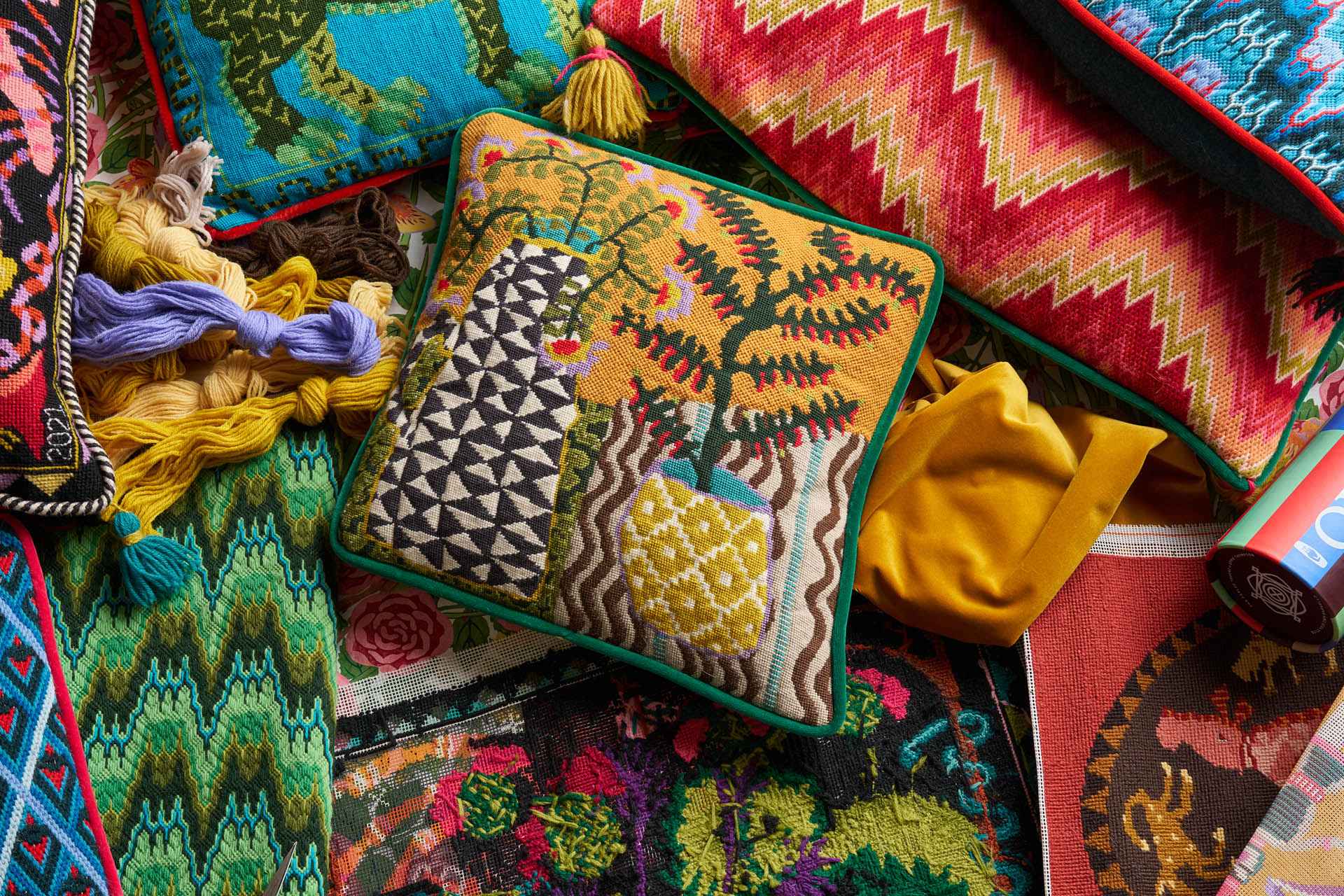
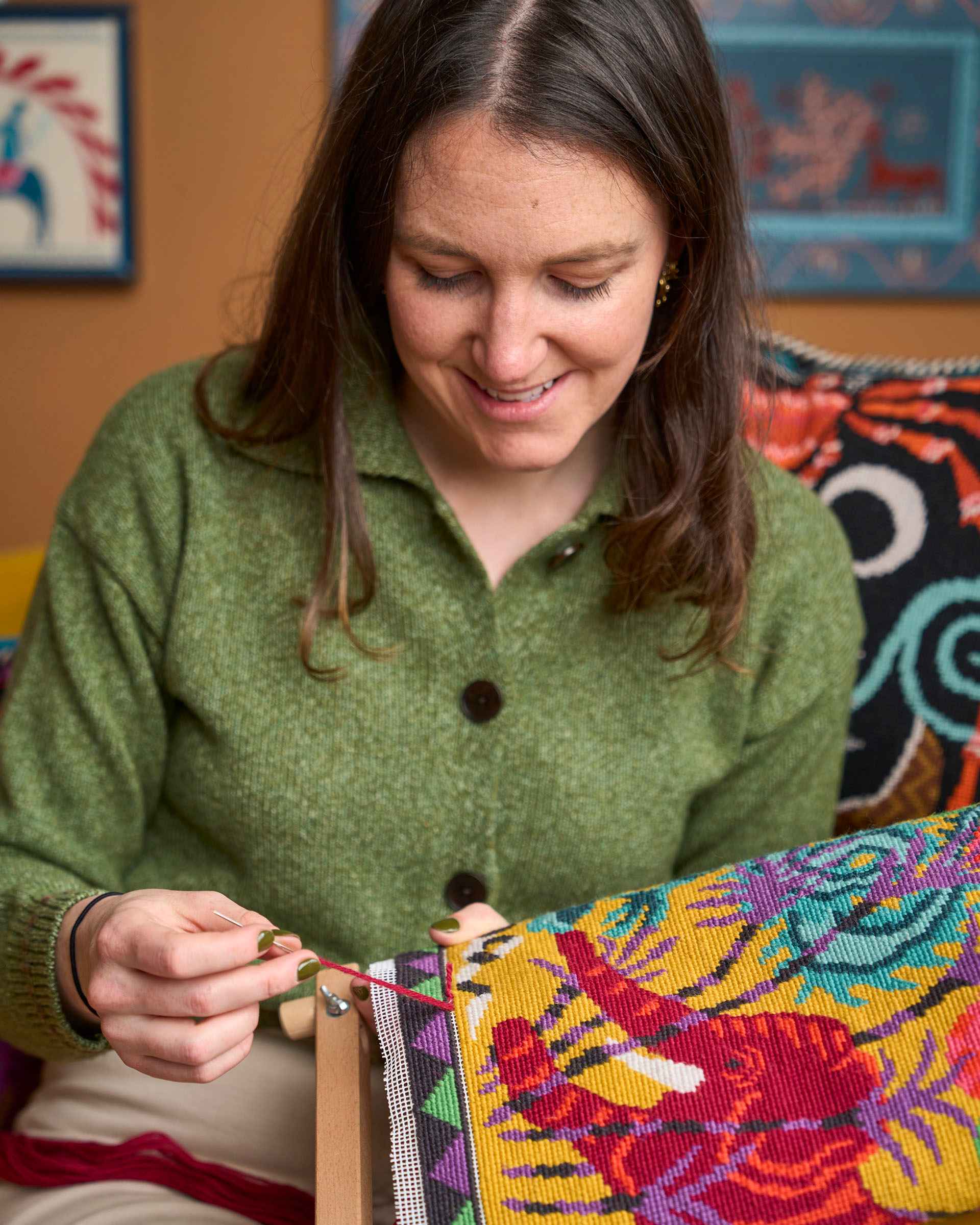
Over the last few months, largely thanks to Clare (@ozneedleandthread on Instagram) spreading the word, we've had a rocket in the number of orders for our needlepoint kits coming from the US. What's been even more fun is that many of those ordering have also been visiting us in the studio, and giving us the chance to chat about the fascinating differences between UK and US needlepoint, hearing just how differently needlepoint is approached on either side of the Atlantic.
For a start, let's address the first big difference. We call it tapestry. I know, I know - it's not weaving, it's a thoroughly incorrect use of the word. But in the UK, a tapestry kit is what would be called a needlepoint kit in the US. I've had to work quite hard over the years to make sure both I and the website are translating properly for audiences in both countries.
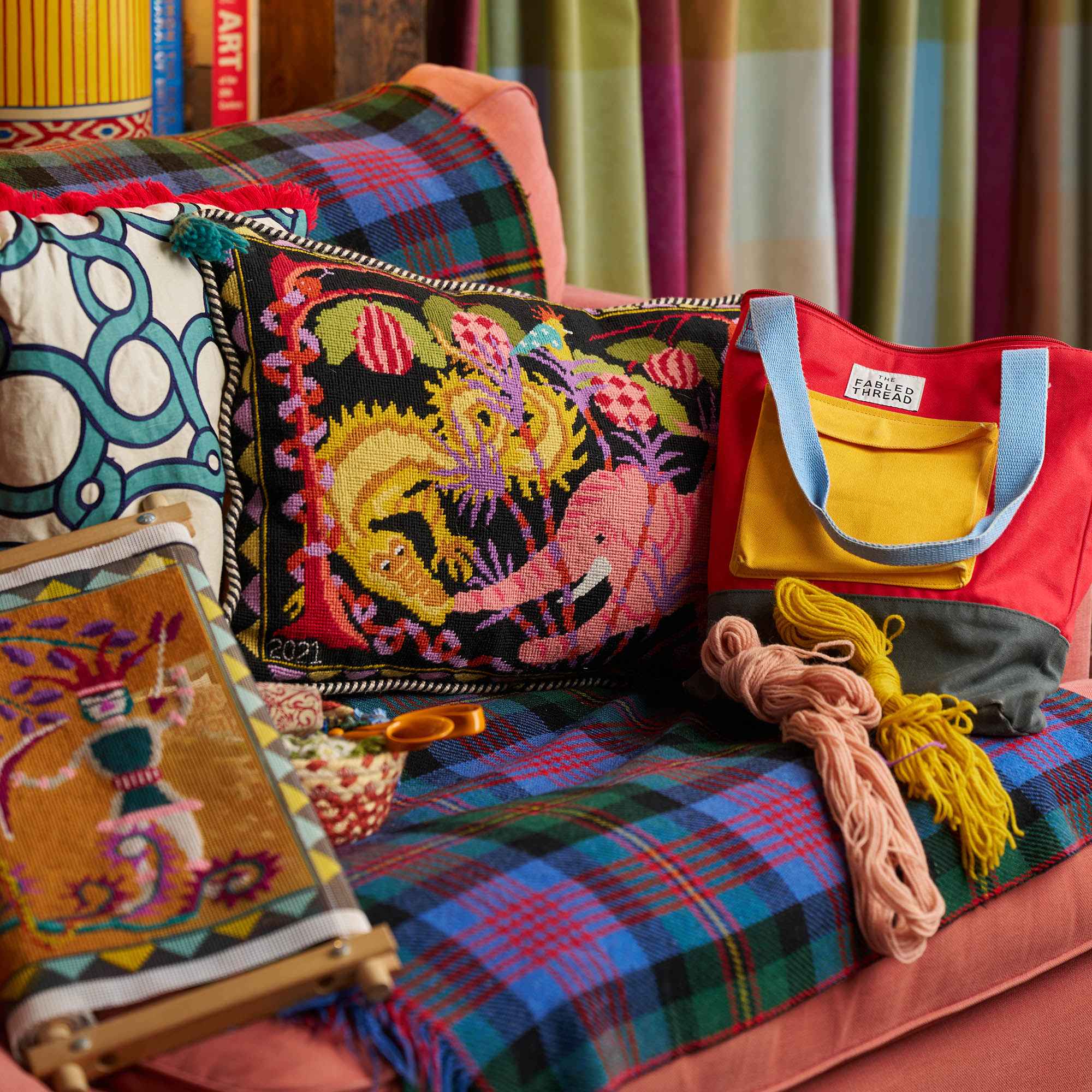
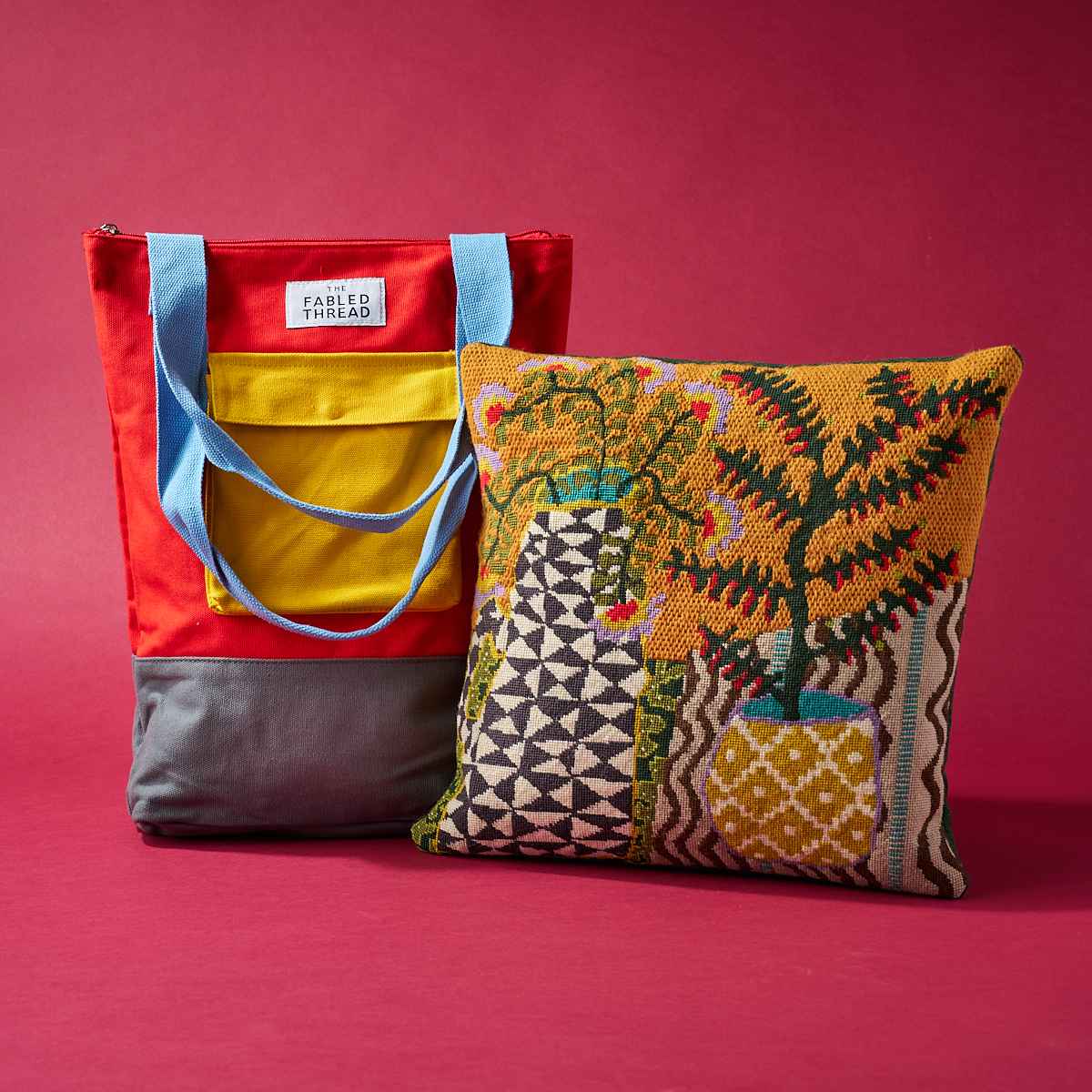
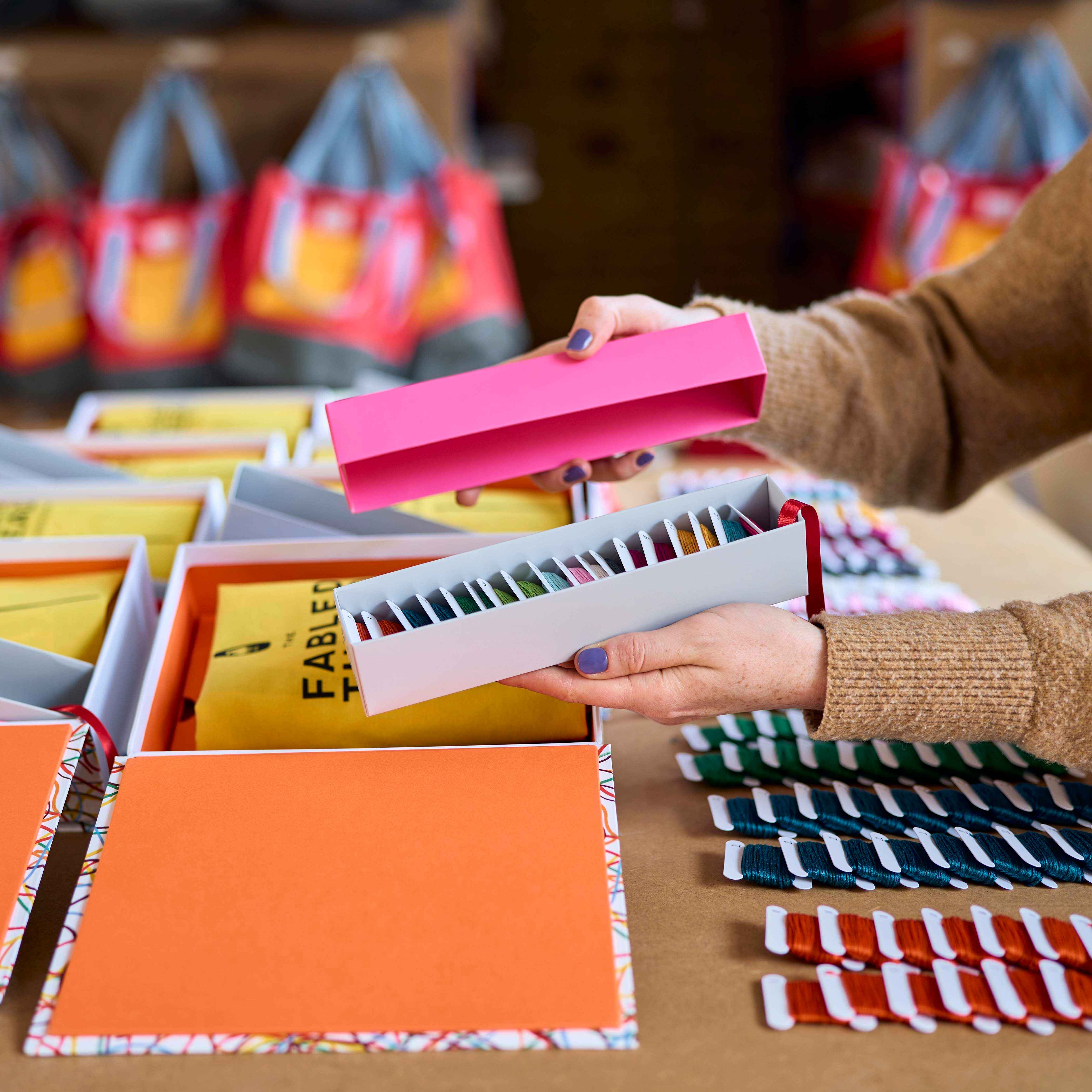
Then it turns out that "kitting" isn't nearly as common in the US. Most people seem to buy needlepoint canvases and threads separately, choosing from a huge range of different threads. Whereas in the UK, we really are all about the needlepoint kits. If our canvases didn't come with wool, and people were expected to go off and choose their own colours, I suspect we'd have a lot of unhappy British stitchers.
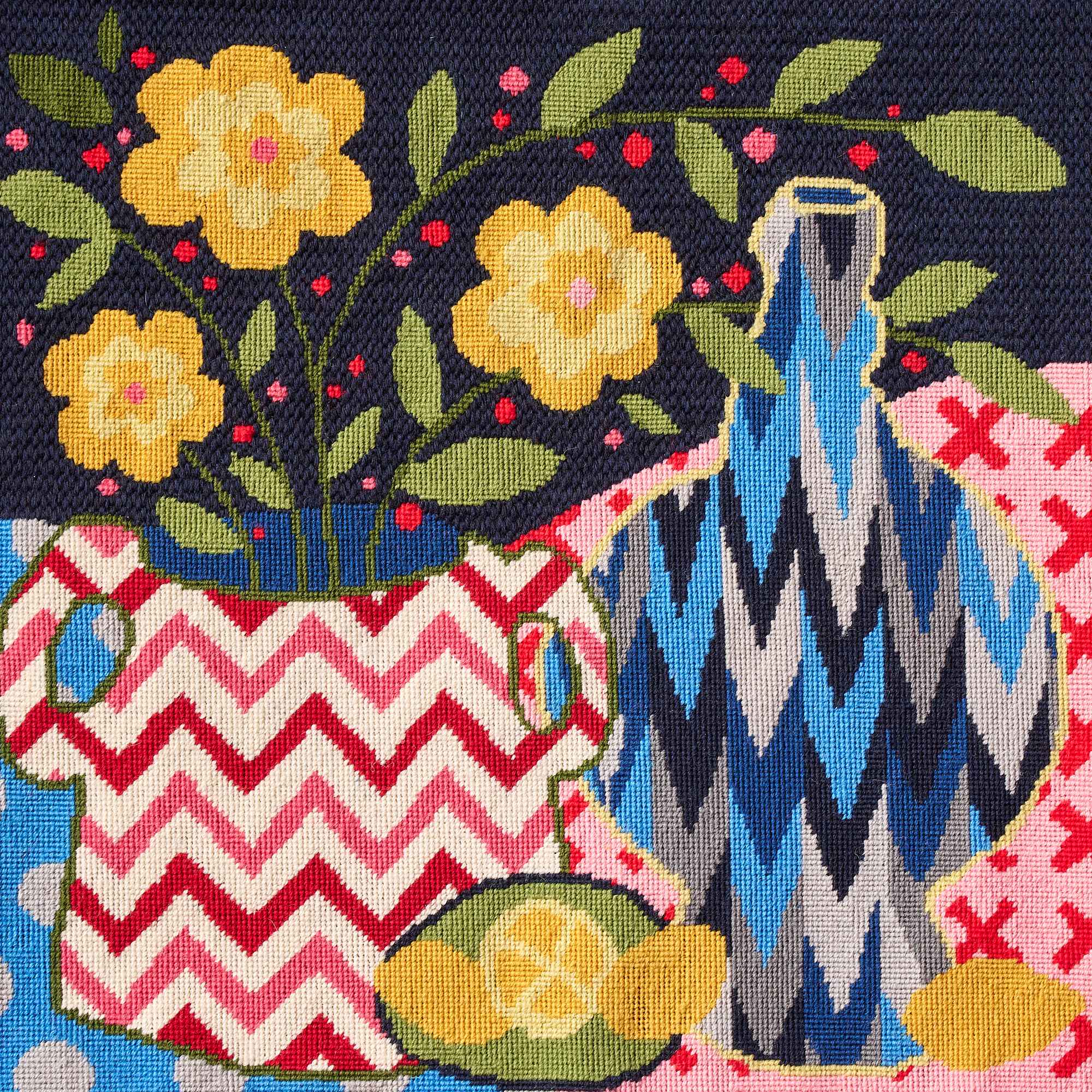
The canvas size itself is also surprisingly divisive. In the UK, most tapestry kits are stitched on 10 HPI canvas. In the US, that size seems to be fairly uncommon. In fact, I hear it can be looked down upon a little (far too simple!). Instead, 13 and 18 count canvases are much more common. If we tried to get people stitching on 18 count over here, I think we'd hear quite a few complaints about eyesight, speed and general levels of suffering!
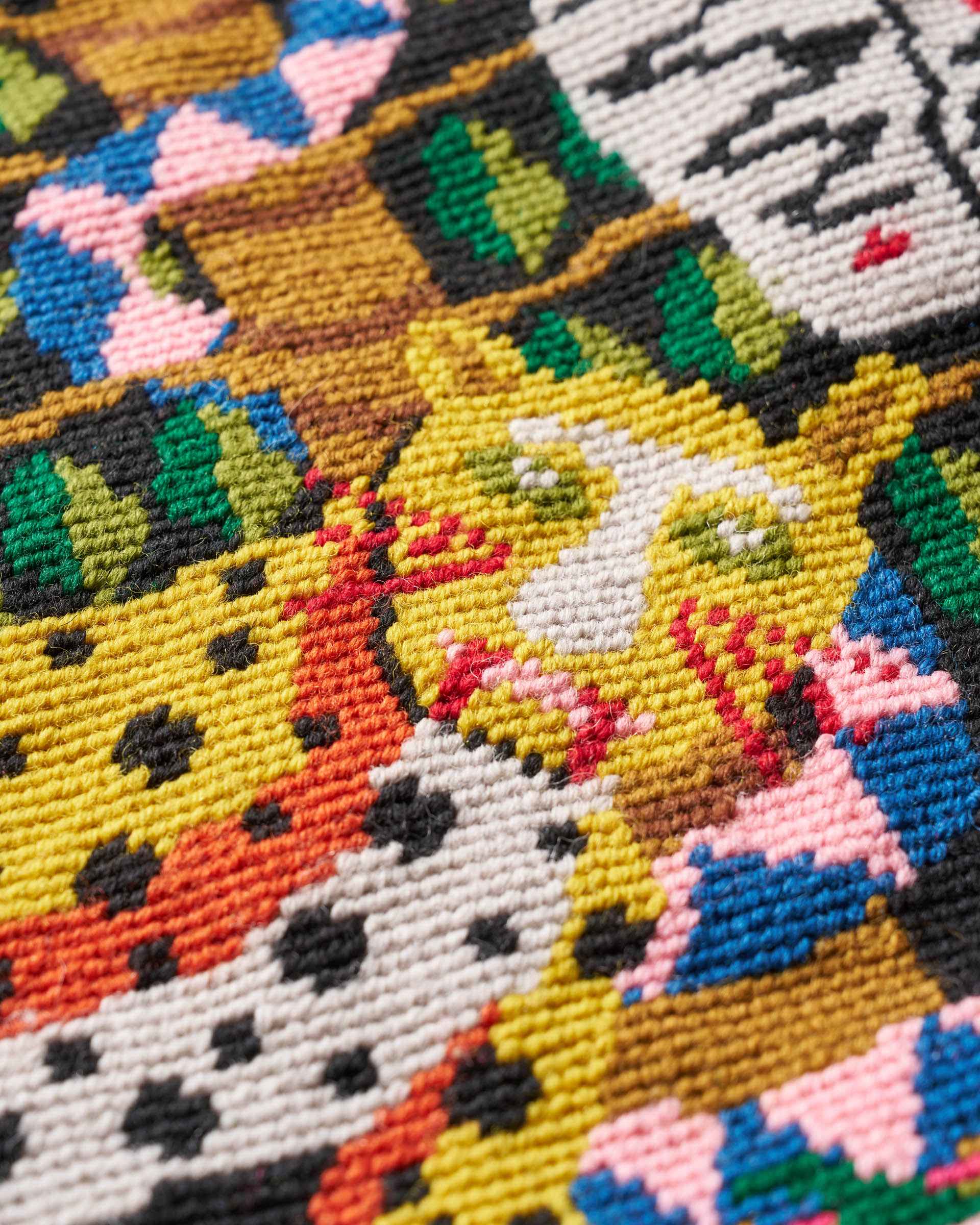
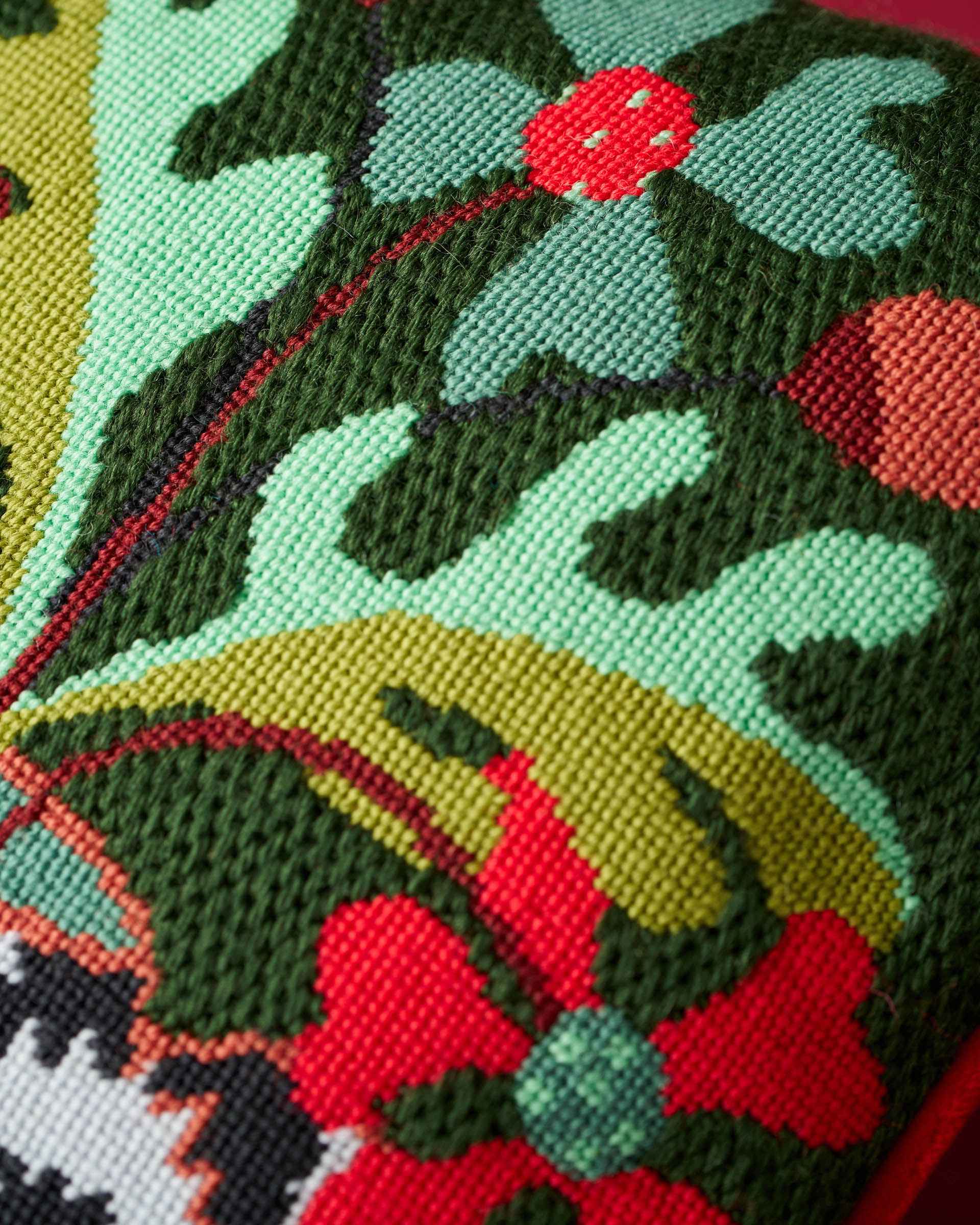
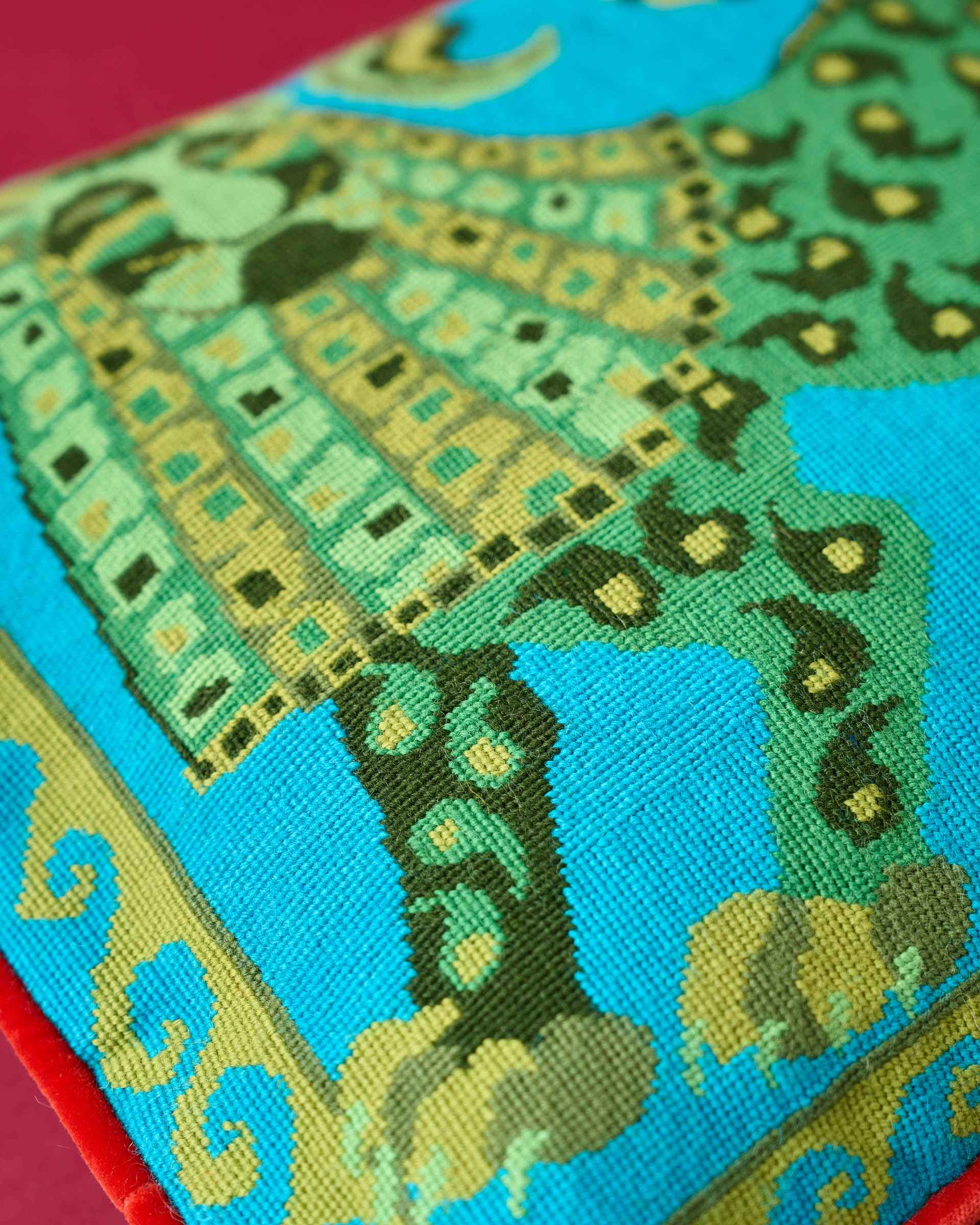
When it comes to needlepoint stitches, we also tend to be rather conservative in the UK. We might go wild and choose between tent stitch and cross stitch. If we're feeling particularly adventurous, perhaps a brick stitch. Whilst we experiment endlessly with stitches in embroidery, we're generally fairly straight-laced when it comes to needlepoint. That doesn't seem to be the case in the US. A customer, Kristin, kindly dropped off a book of needlepoint stitches for me and I had no idea how much was possible with a gridded canvas!
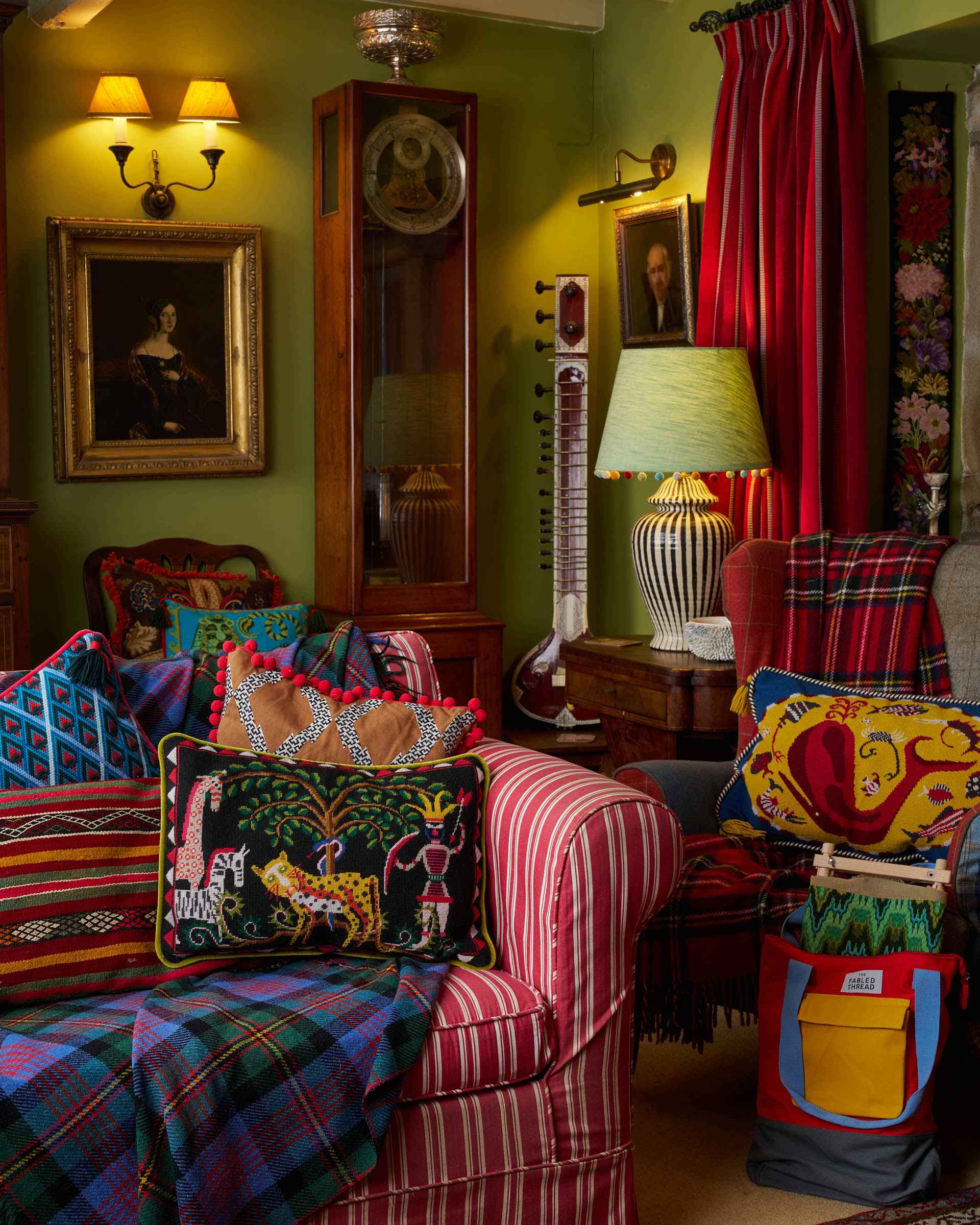
Then there are the finished objects themselves. Recently we framed some Schumacher canvases and that felt quite radical. What would people think if tapestry wasn't turned into a cushion or a rug? But the range of needlepoint finishing I see from US stitchers is extraordinary. The three-dimensional ornaments particularly blow my mind, but there are also trays, phone cases, luggage tags, laptop covers, coasters, handbags and all manner of things I'd never considered.
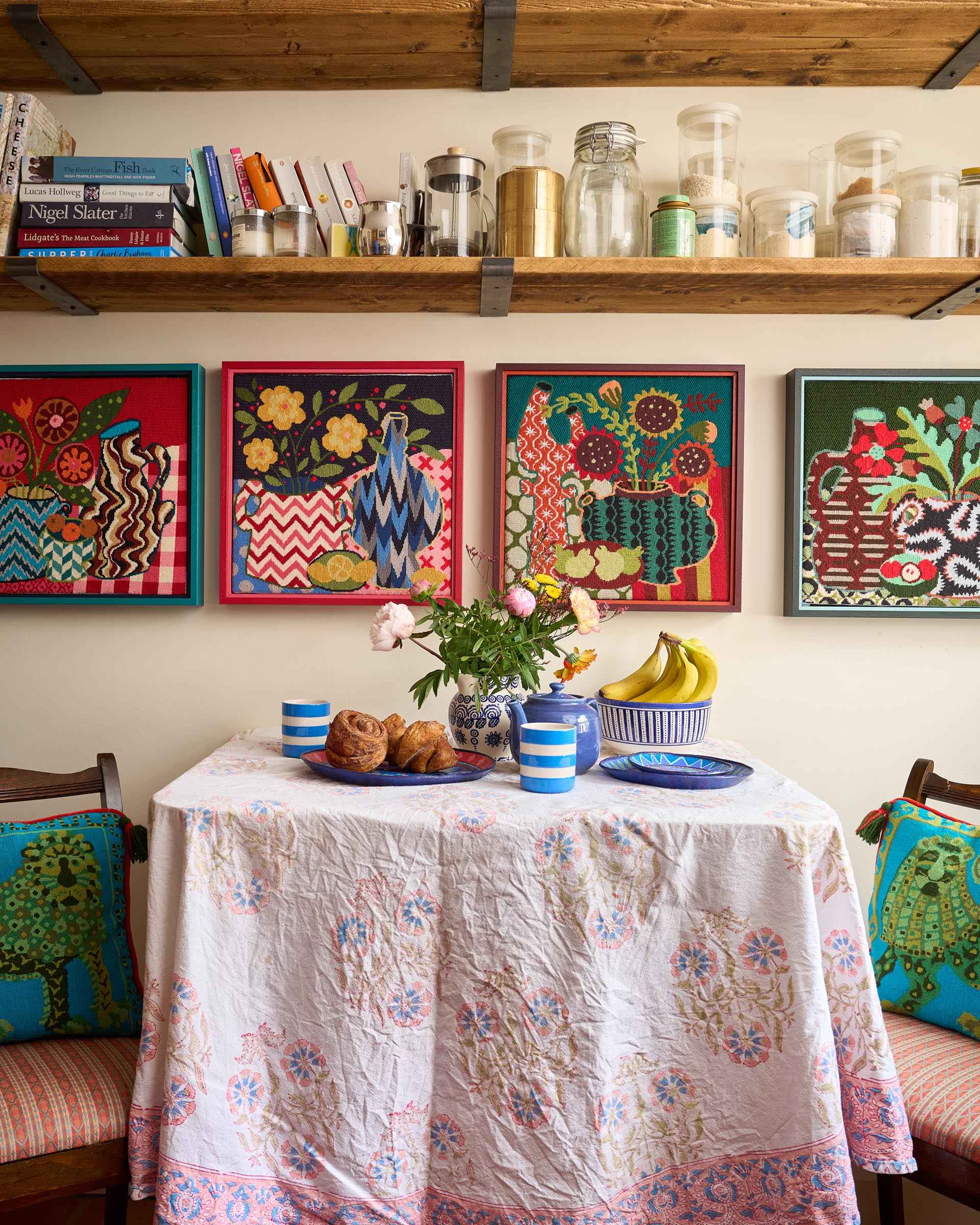
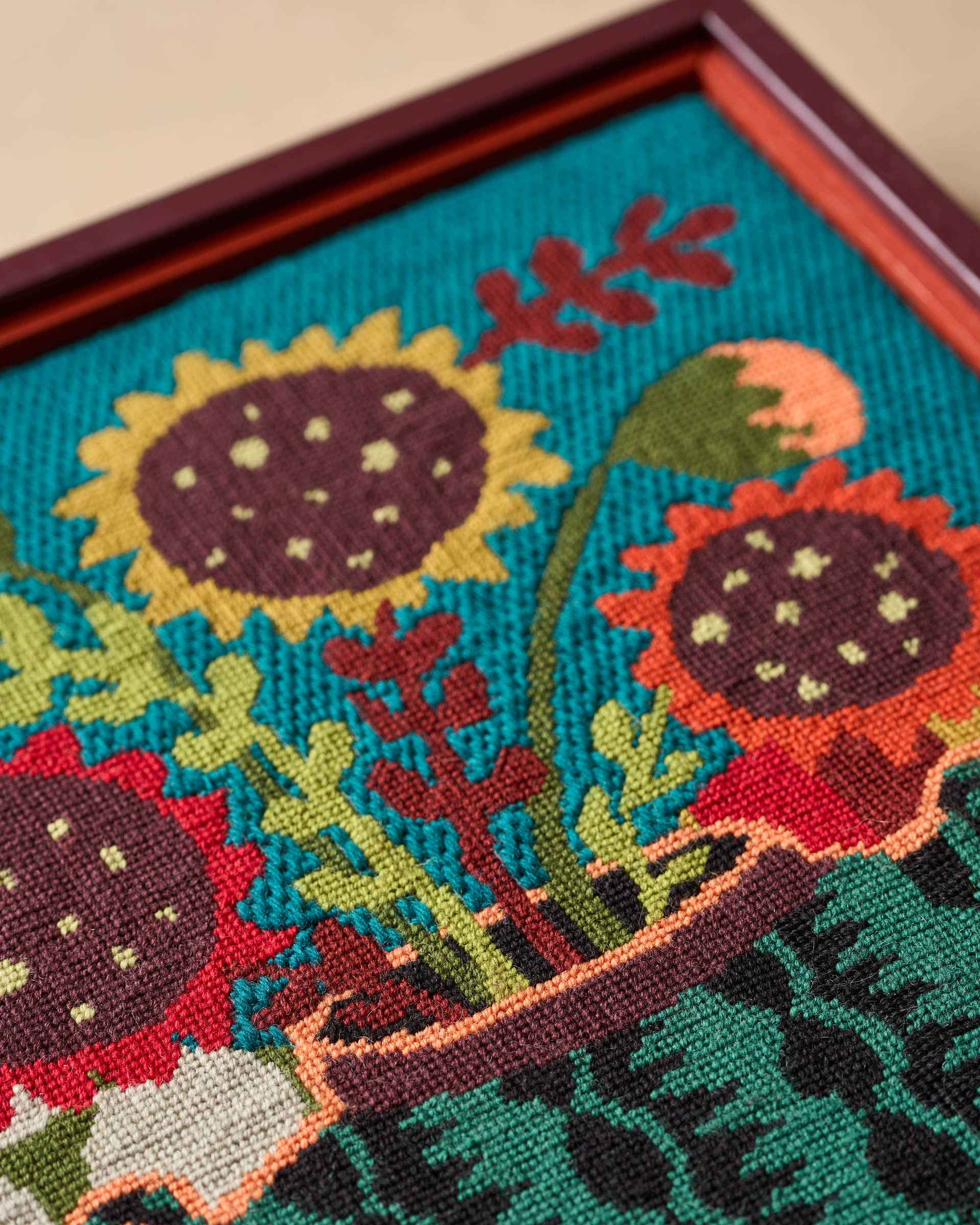
Then there's the thread itself. Our needlepoint kits are stitched in wool because it's simply what I've always known. It's hard-wearing, forgiving and ideal for functional objects like cushions. It wasn't until I visited the US and spent time in Annie and Co in New York that I realised quite how many options exist. Velvet threads, fluffy threads, sparkly threads, silks, raffia – the list seemed endless.
We print all of our needlepoint canvases in the UK. In the US, hand-painted needlepoint canvases are far more common and not just casually painted, but stitch-painted. Someone has painstakingly placed a dab of paint in every single location that will later be stitched over. I completely understand the appeal - a stitch-painted canvas removes any uncertainty about which colour belongs where – but goodness me, I envy the patience of the people painting them. In the UK, we tend to accept that printed needlepoint canvases occasionally require a little interpretation.
Our Needlepoint Kits




Then there's the canvas itself. Until recently, I had never really questioned whether I was stitching on interlock or mono canvas. For the record, all of our needlepoint kits include cotton interlock canvases because they hold their structure beautifully during stitching and, quite simply, it's what my granny always used. Beyond avoiding plastic canvas, I hadn't realised people had strong preferences. I genuinely thought canvas was canvas. Apparently not. It turns out there are very definite opinions in the US and interlock doesn't seem to be the favourite. As I understand it, part of the reasoning is that mono canvas is easier to block once stitching is finished.
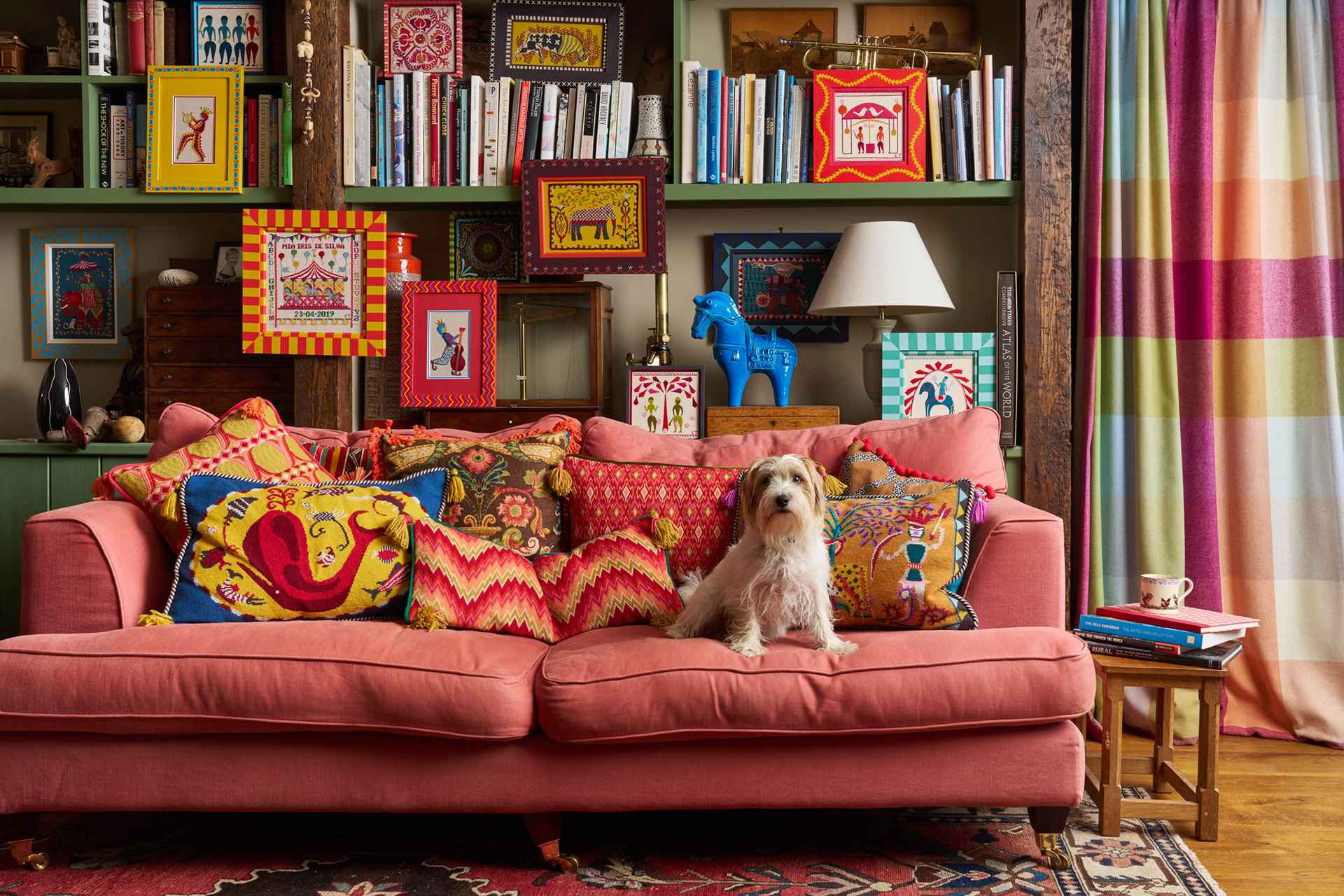
Finally, there's the elephant in the room: the price. We're certainly at the more expensive end of the UK market, but I was still slightly baffled when I first visited US needlepoint shops and saw the cost of the hobby. Then again, when you add up hand-painted needlepoint canvases, silk threads, elaborate finishing options and all the other elements, it becomes much easier to understand why. But it seems quite an inaccessible hobby for those just getting started!
Meeting so many people with a completely different cultural approach to a craft that my family has been doing for generations has been a bit like discovering it all over again. Suddenly you're forced to look at everything with fresh eyes.
So what have I missed? What are the other big differences between UK and US needlepoint that I haven't discovered yet? What do you wish we did differently?