Embroidery 101: Why do you need an embroidery hoop
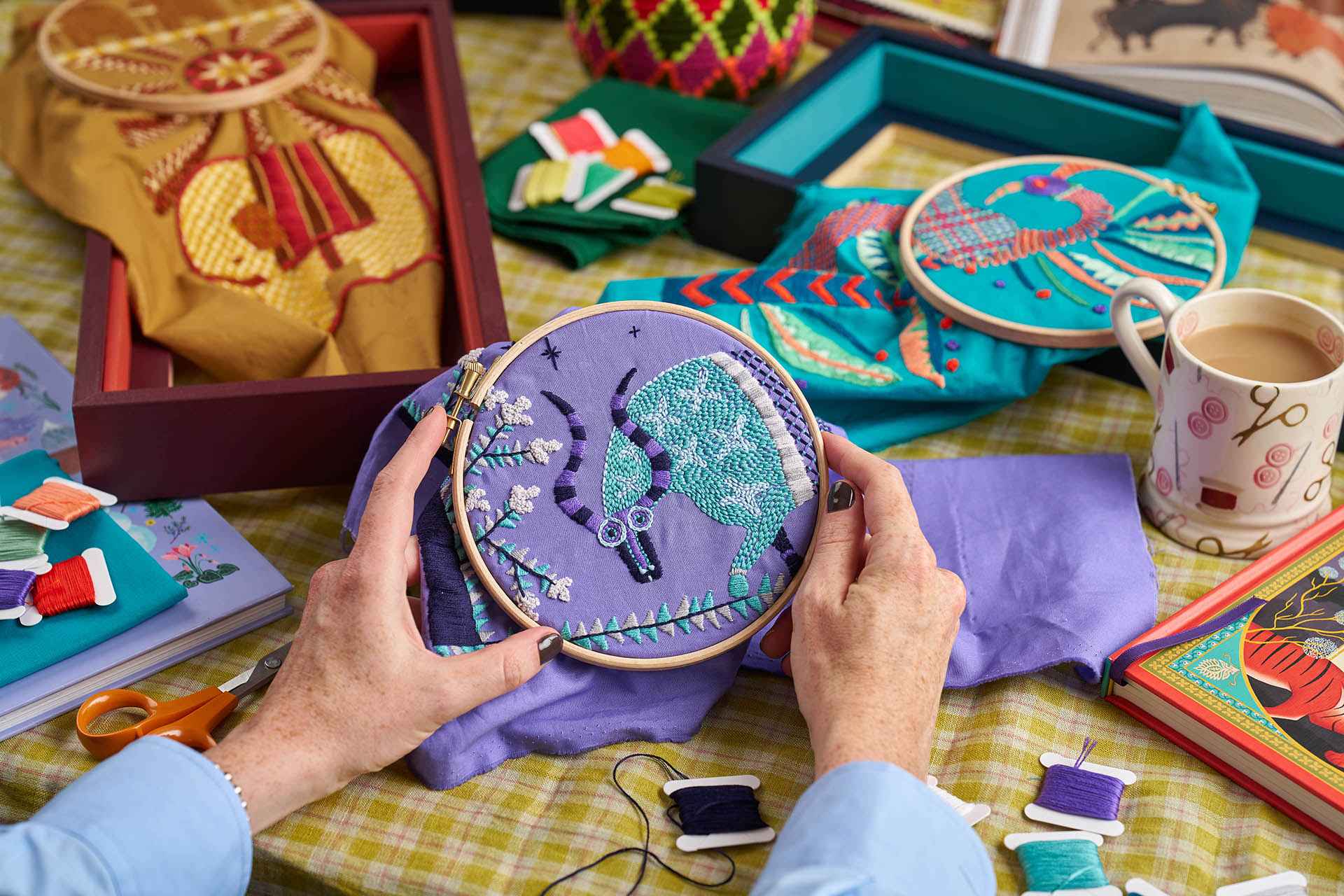
When I started stitching, for a while I worked either without an embroidery hoop or with one of these wide rectangle rolling frames. Whilst these frames work well for needlepoint, they are a nightmare for embroidery as they aren't as good at maintaining tension in your fabric.
Firstly, having tension in the fabric means you won't pull your stitches too tight and create creases in the fabric which you can't get out when you later stretch your piece. Secondly, taut fabric makes it much easier to create neat stitches. Doing French knots without an embroidery hoop is nigh on impossible to achieve a neat knot (video here on how to do French knots). Finally, you will find it much easier to position your needle accurately on the back of the fabric whilst stitching, making the whole process quicker!
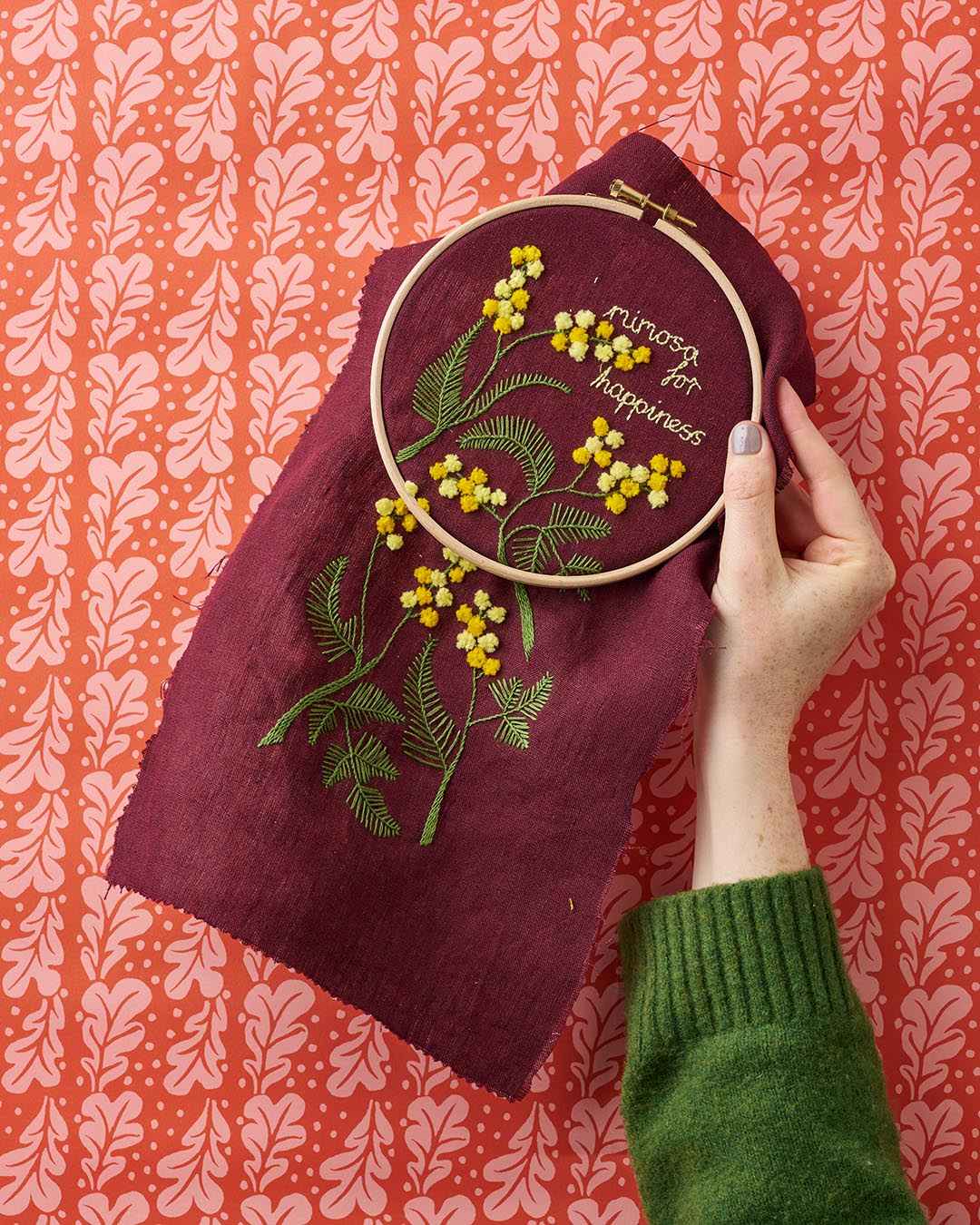
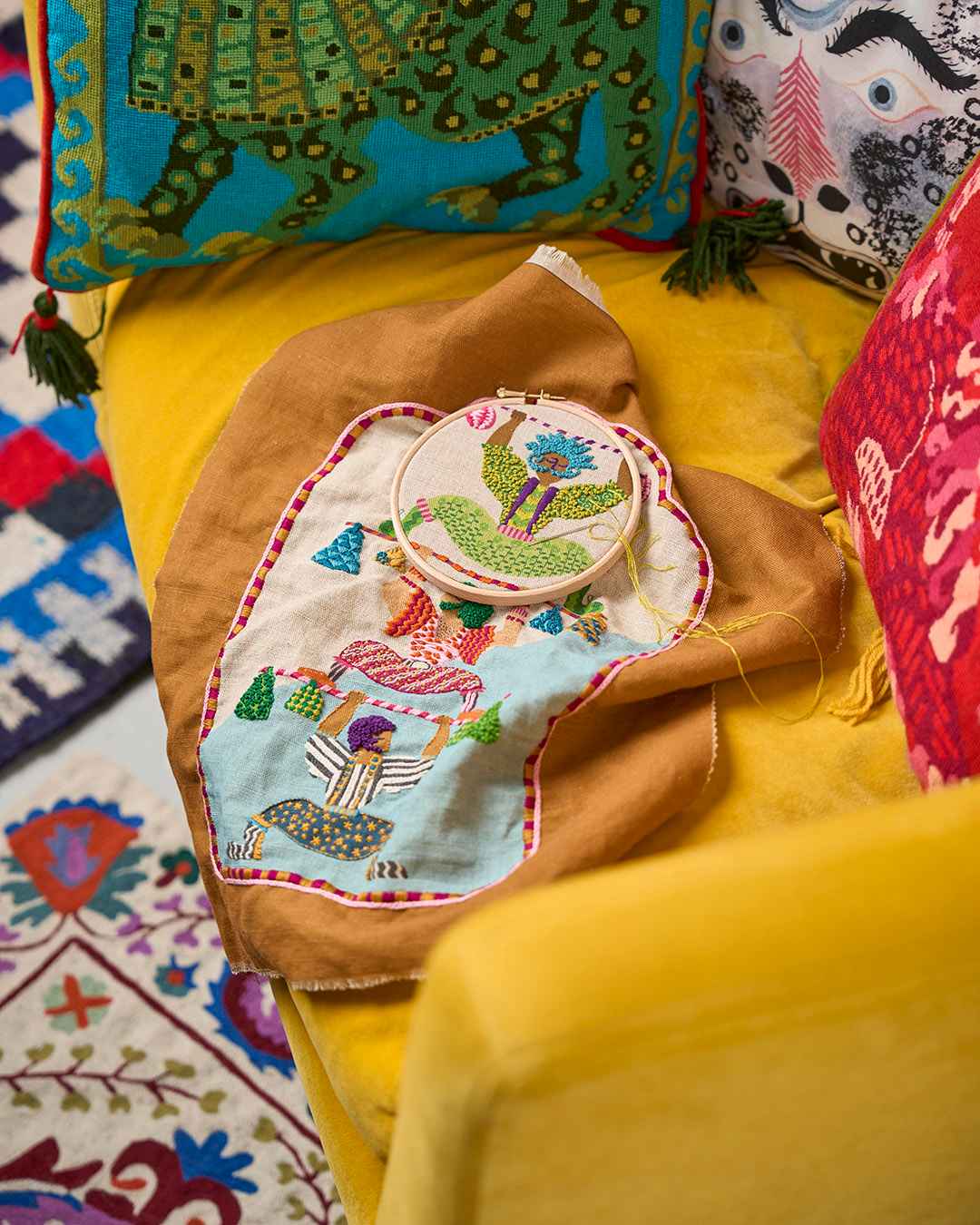
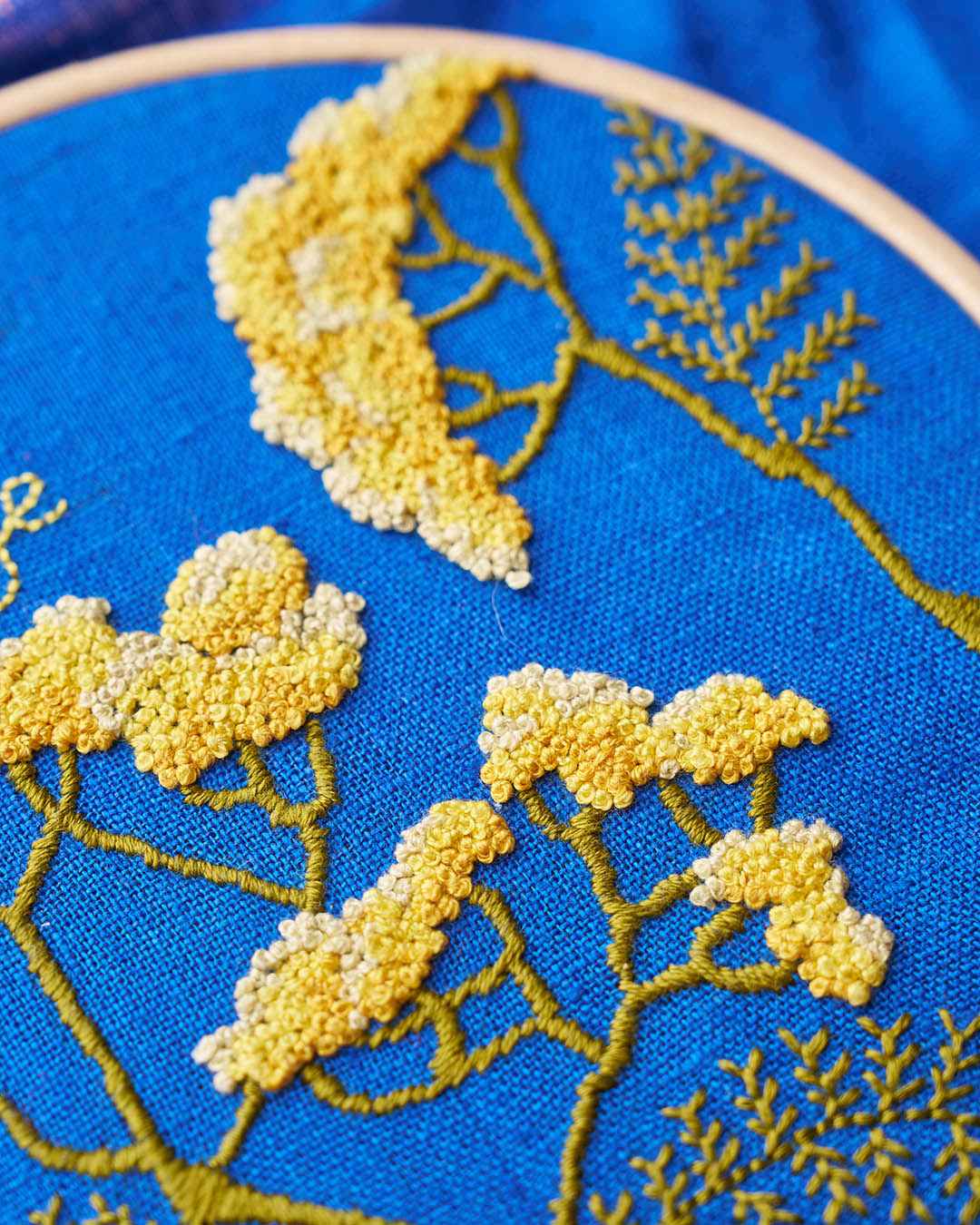
When I first started stitching, I bought embroidery hoops which would fit the entire design in, meaning sometimes they would be over 12"! These hoops were always terrible at maintaining good tension in the middle.
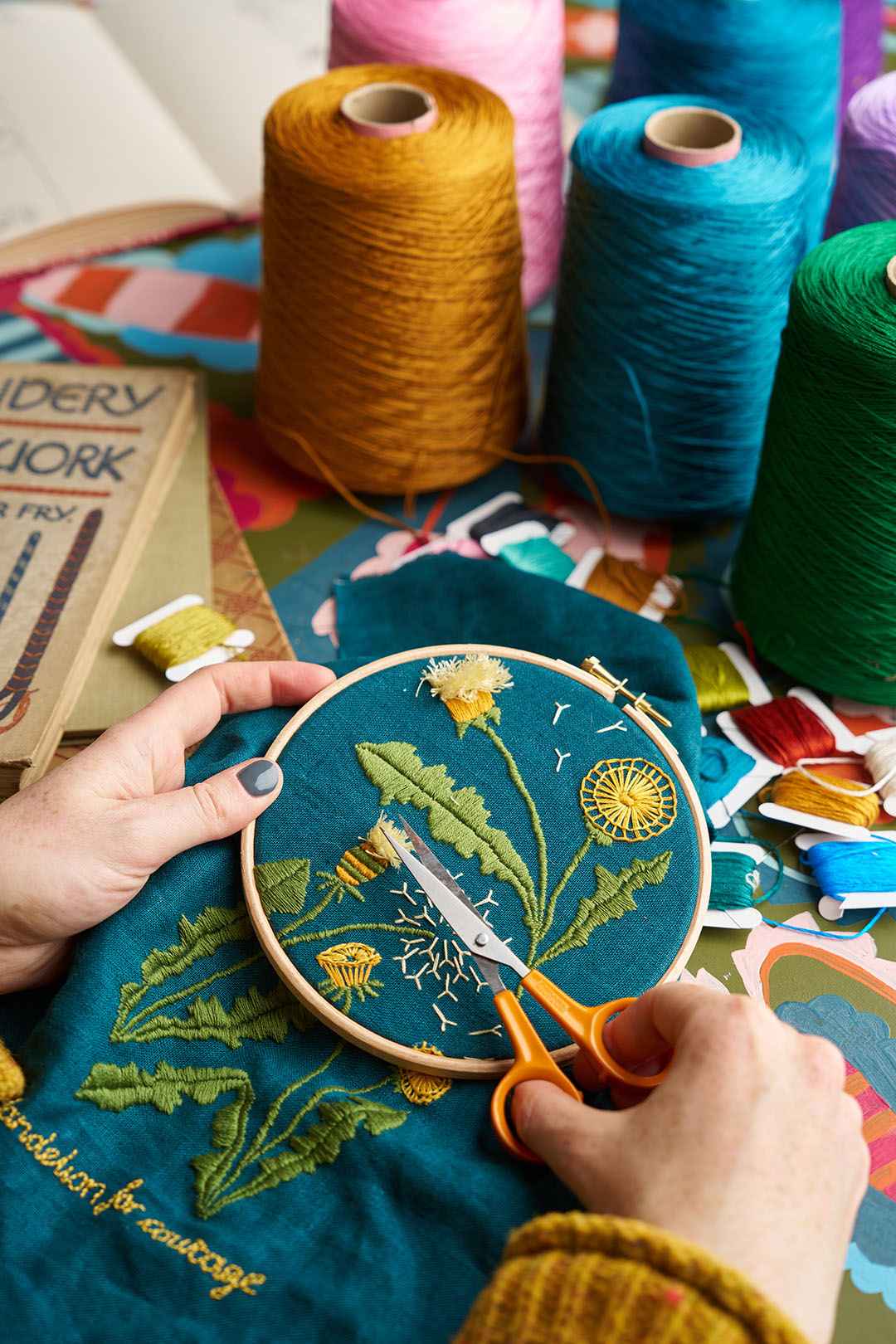
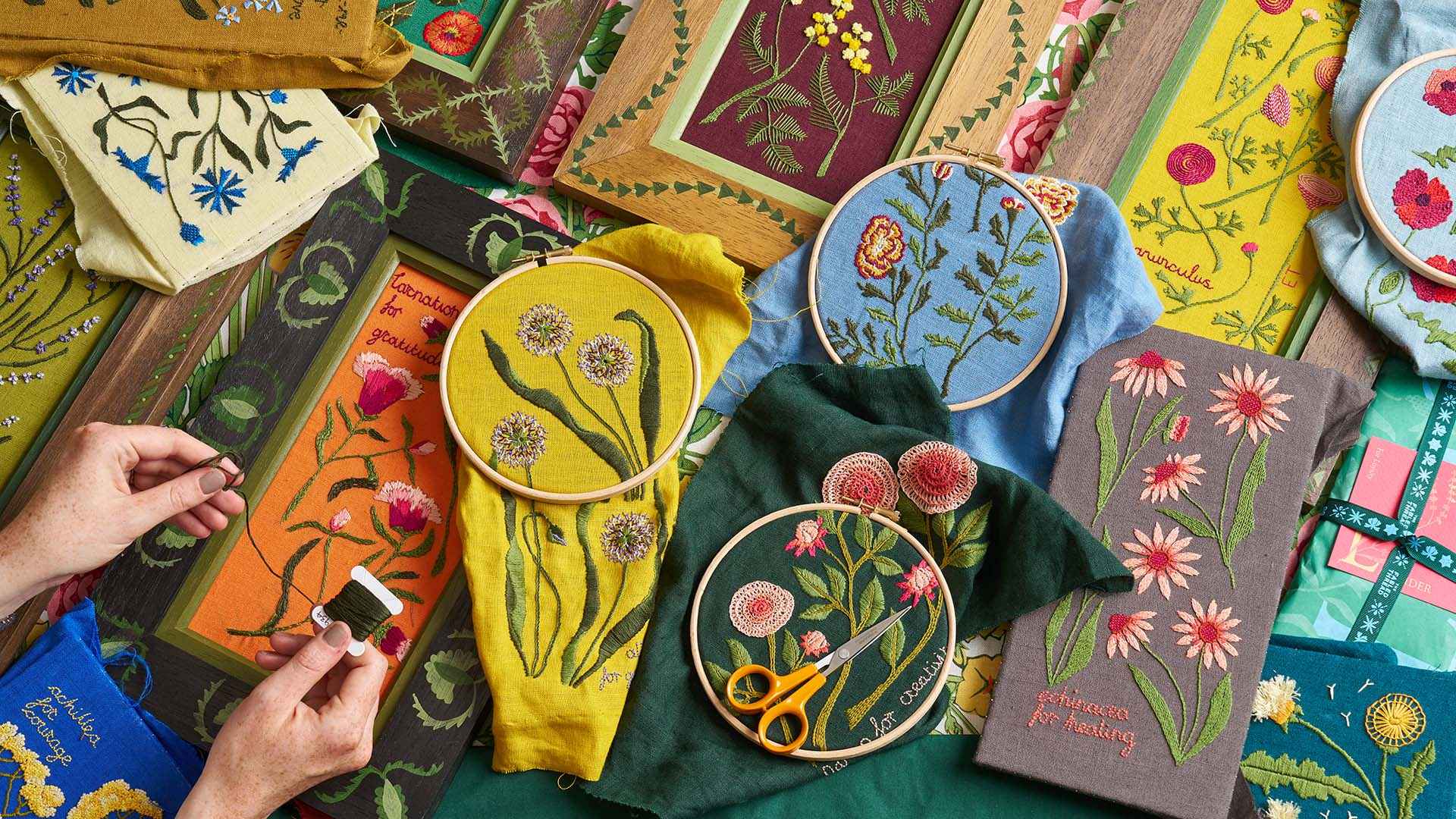
So over time, I switched and started stitching all my embroidery designs with a 5" or 6" embroidery hoop, regardless of the size of the piece. I just move the hoop across the fabric as I stitch. This doesn't cause any damage to the stitches underneath the hoops, helps keep the tension and makes the whole embroidery set more portable. That is why we include those smaller embroidery hoops in all our kits.
In the video below, we have an extract from our Start Stitching virtual course showing how to put an embroidery hoop onto fabric.
Essentially, you want the hoop to be as tight as possible as you place it onto your fabric, rather than tightening it once it’s already on. It should be taut enough to make a drum-like sound when tapped. If you find your fabric loosening, remove the hoop, tighten the screw, then lay your fabric and hoop on a table and use your body weight to press the hoop firmly onto the fabric.
Wrapping your embroidery hoop can help improve tension, however, it doesn’t make a dramatic enough difference to feel necessary for most projects and can be a bit of a faff.
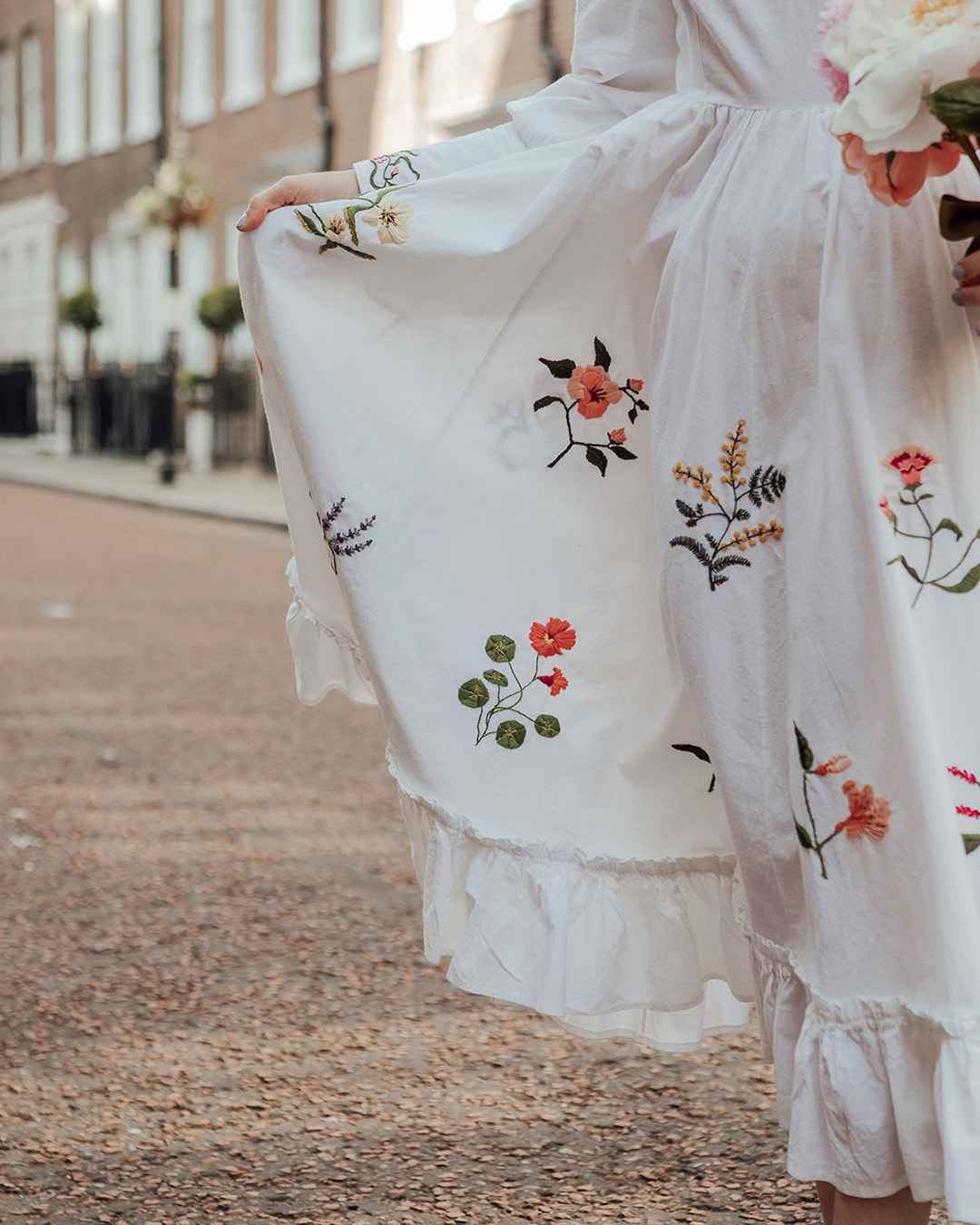
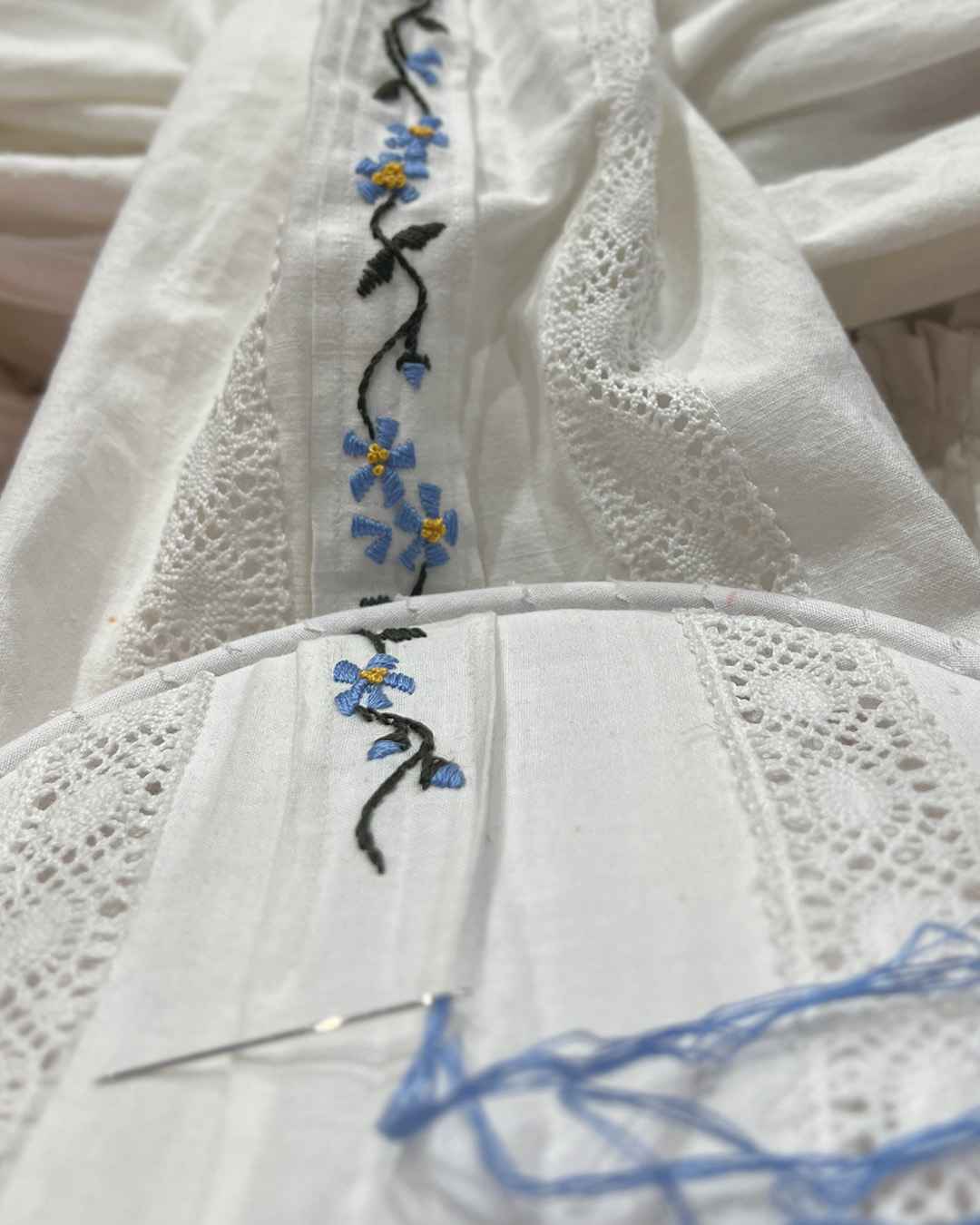
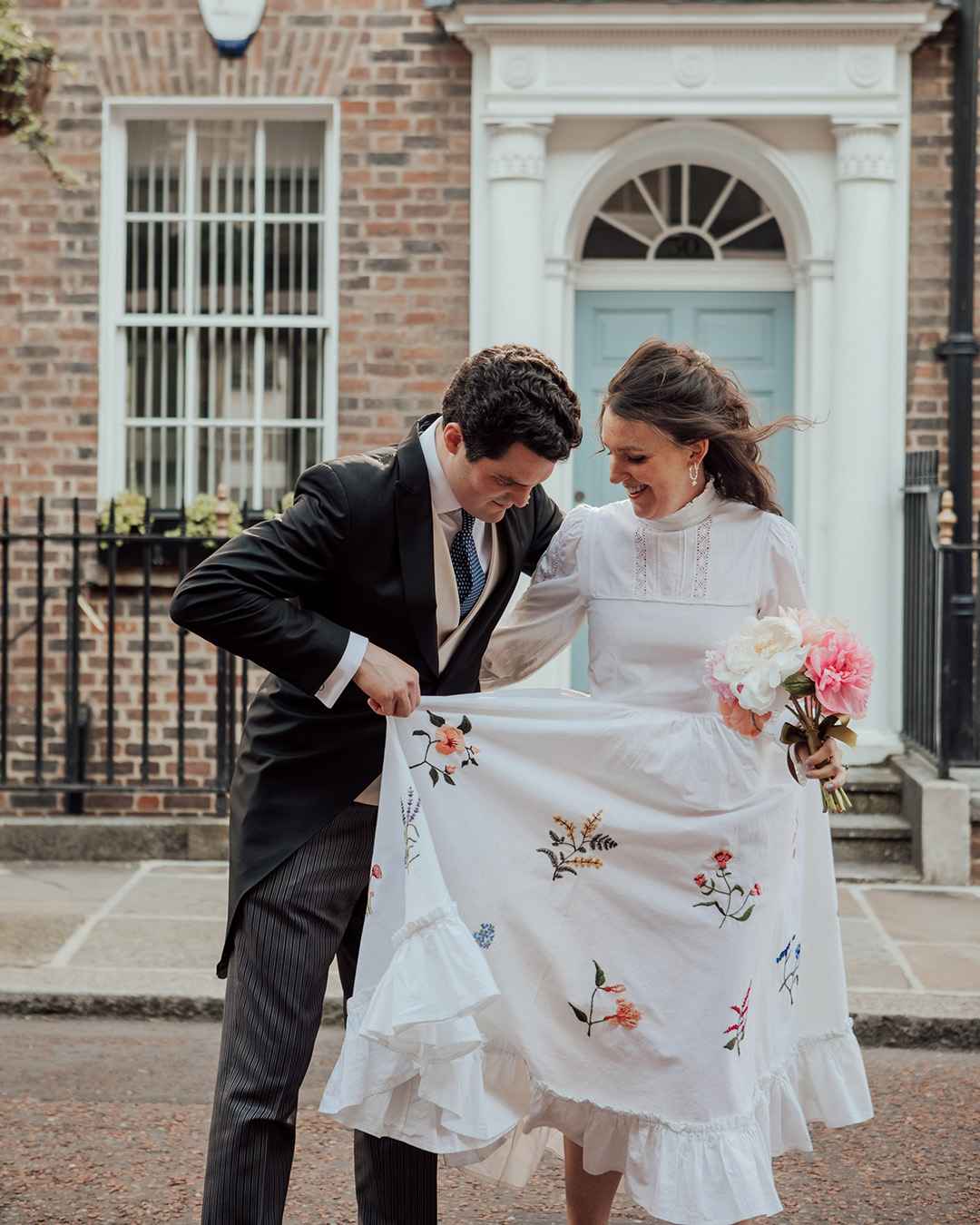
Therefore, we’d only recommend wrapping your embroidery hoop if you’re working with a particularly delicate fabric and want to make sure you don’t mark it. I did this for my wedding dress, which you can read in the article here.
YES! If you are finding your hoop keeps losing tension, then it’s the hoop that is likely the problem not you – you can get lots of very cheap bamboo hoops, but they are cheap for a reason – they don’t work as well. We stock Elbesee hoops which, having tried and tested many, are the best!
Our favourite embroidery hoops


It's best practice to remove your hoop every time you aren’t working on the design to avoid creases and marks from forming. But if from time to time you forget - don’t panic! I have left hoops on for months, and you would never be able to tell now in the finished piece.
And if you're concerned about any creases, thankfully, there is no need to iron your finished embroidery, as the mounting process eliminates the need for ironing by simply pinning your embroidered fabric taut. You can read our top tips for mounting your embroidery in this article here.
- Can I embroider without a hoop? Yes, but it's harder. You may not want to use a hoop on very structured fabric and for needlepoint, it's typically preferred to use a rolling frame rather than a hoop.
- Why does my hoop keep slipping? This could be down to a few factors. If the hoop is cheap or low quality, it might not be able to maintain the tension. Another possibility is that the screw isn’t tight enough. Finally, if the fabric is slippery, thin, or elasticated, it could cause the hoop to lose tension.
- How tight should an embroidery hoop be? You want the hoop to be as tight as possible. Tighten the screw, then lay your fabric and hoop on a table and use your body weight to press the hoop firmly onto the fabric.
- Do different fabrics need different hoops? No - only if you're using delicate fabrics you might want to wrap your hoop with fabric.
- How long can fabric stay in a hoop? It's best practice to remove your hoop every time you aren’t working on the design. But if from time to time you forget - don’t panic! I have left hoops on for months, and you would never be able to tell now in the finished piece. Read our mounting guide to see how to get rid of creases.
- Can hoops be used for display long-term? They can, but we much prefer to frame – it makes the project look more like a piece of art than a craft kit. Read our top tips for framing your embroidery here.