Top Tips on Making Life More Analogue (and Why So Many of Us Are Craving It)
At some point over the past decade or so, life became extremely online.
We document everything, message constantly, scroll endlessly, and somehow still feel as though we’re always behind on something. Even hobbies have started to feel suspiciously productive, as if every activity now needs to double as content or a side hustle.
It's no surprise that we have started rebelling against this feeling - rebelling against the need to be constantly on. But, given we can't simply just decide to disconnect a bit more, of course - its become a bit of a movement. What is now being known as "analog living". In fact - it was in the top 5 google search trends this January (alongside needlepoint which shows how the tide is turning on this old-fashion hobby). We had some american customers visit the studio last week who said that needlepoint was exploding so much right now it was actually hard to even get your hands on canvas, which is wild!
In this article we want to explore the ways to make your life more analogue, but first, what do we mean?
Analogue or Analog traditionally refers to non-digital, physical systems think film cameras vs digital cameras, vinyl vs streaming, handwritten letters vs emails and so on.
People have started calling the choice analogue vs digital living. Which sounds terribly technical for something that is essentially just… doing things with your hands again.
It means, when presented with options, you'll go for the route that happens slowly, quietly and mostly off-screen. Reading a book without simultaneously checking notifications. Listening to an album from start to finish. Sitting down with a needle and thread and making something for no reason other than the pleasure of it.
It does not mean rejecting technology entirely, it’s about balance and intentionality, in other words, choosing when to engage digitally and when not to. Analog living is less about nostalgia and more about regaining focus, presence and depth.
There are plenty of reasons analogue living has started to appeal again. A lot of us feel quietly exhausted by the digital world - the comparison culture, the endless doomscrolling, the constant stream of news, opinions, and other people’s highlight reels.
Being permanently reachable doesn’t help either. Somewhere along the way we began to feel as though everything needed to be documented, shared, optimised, or turned into something vaguely productive. Even hobbies started to feel suspiciously like work.
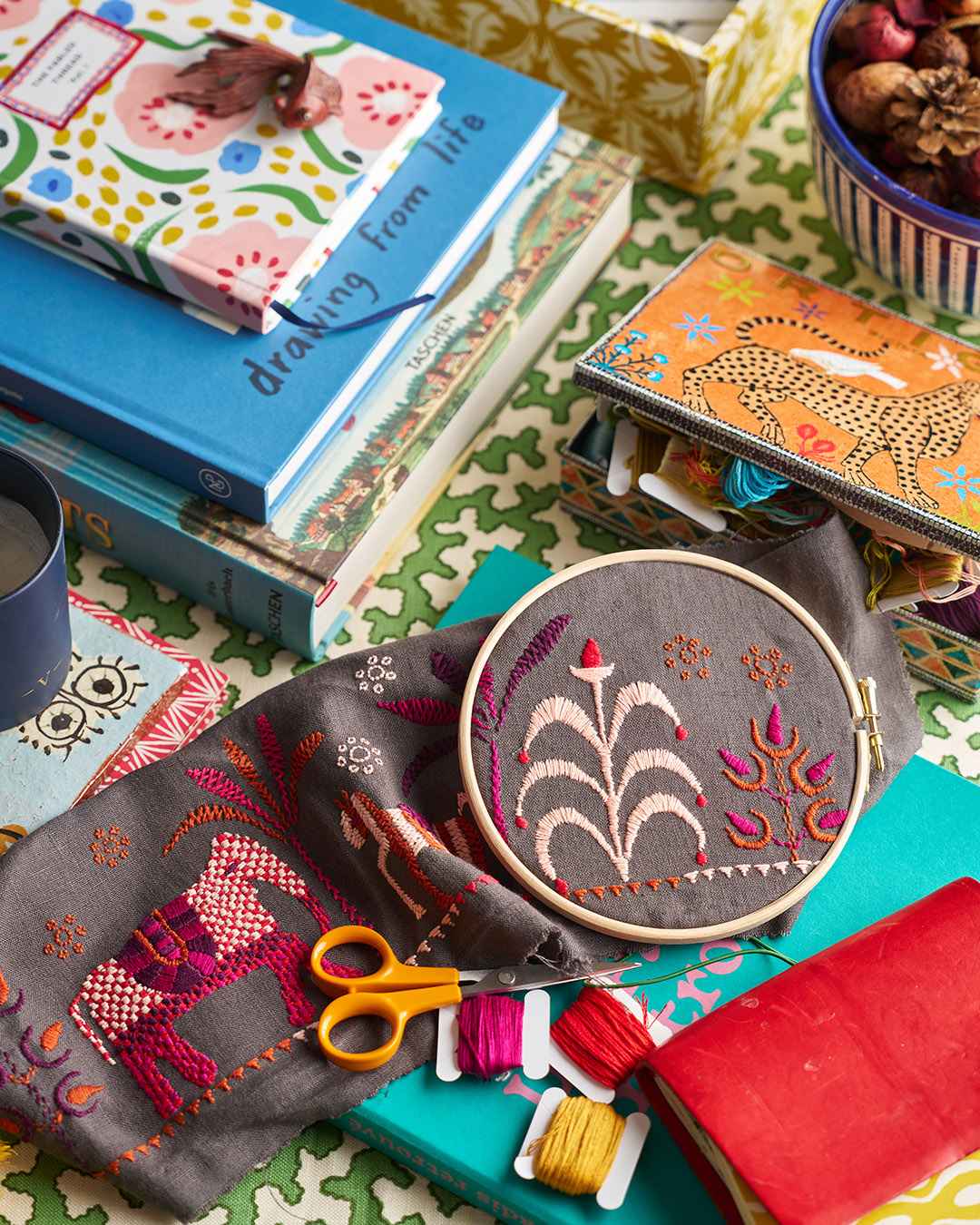
So it’s not surprising there’s a growing pull towards activities that exist entirely offline. Things you do simply for the sake of doing them, without an audience and without a screen. Proper rest, in other words - the sort that doesn’t involve another glowing rectangle.
We rushed headlong into online living about twenty years ago, and only recently have we started to notice what quietly slipped away along the way: boredom, patience, long attention spans, anticipation, privacy, uninterrupted thinking time.
Instead of losing ourselves in what we’re doing, we step outside the moment to arrange it, narrate it, edit it. Part of us is living, but another part is curating. Over time that split erodes the simple pleasure of doing something purely for its own sake. I wrote about this a while ago in my piece “My Life Is Not an Instagram Strategy”, because it’s something I’ve become increasingly conscious of — the quiet pressure to turn ordinary life into something presentable.
Algorithms complicate things further. When so much of what we see is filtered through them, our taste begins to narrow without us noticing. We’re shown more of what we’ve already liked, more of what performs well, more of what resembles what everyone else is making. After a while it becomes surprisingly difficult to tell what you genuinely love from what you’ve simply been shown repeatedly.
Trends accelerate, originality flattens a bit, and creative confidence takes a knock because we’re constantly measuring ourselves against a feed designed to feel authoritative. Add AI into the mix - where it’s increasingly hard to tell what’s real and what isn’t - and it becomes even harder to hear your own instincts.
And despite all this connection, it’s not always particularly deep. We can keep up with hundreds of people’s lives without properly speaking to any of them. We react rather than respond, scroll rather than engage.
When you step back and look at it properly, the way we now live - constantly connected, constantly performing, constantly consuming - starts to feel slightly absurd.
- Set screen-free evenings: try using a self-control timer like Freedom or Brick to help you block out apps from your phone at set times which distract – for example, I have all emails, social media and work-related apps blocked automatically from 7 pm to 8 am every day.
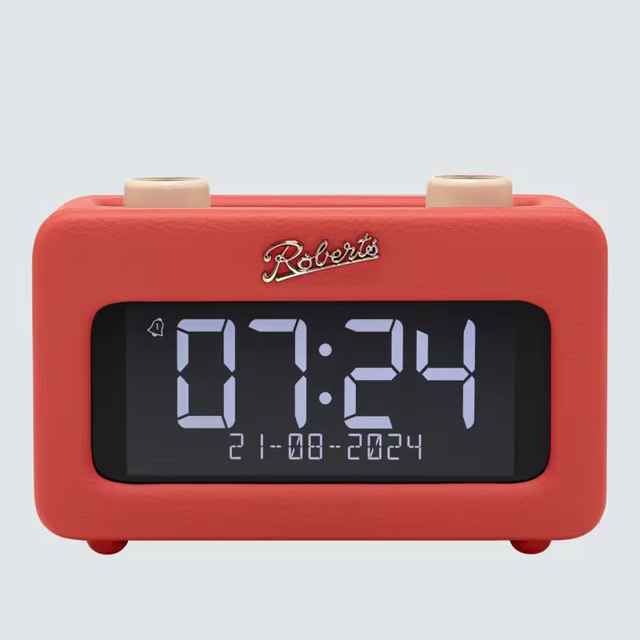
- Don't take your phone to bed: Replace phone alarms with an analogue clock so you don’t have to take your phone to bed with you. If this is a challenge for you because, like me, you listen to audiobooks before bed, then Kindle can also play audiobooks or see if you can find an old unused handset and just get your audiobook app on that.
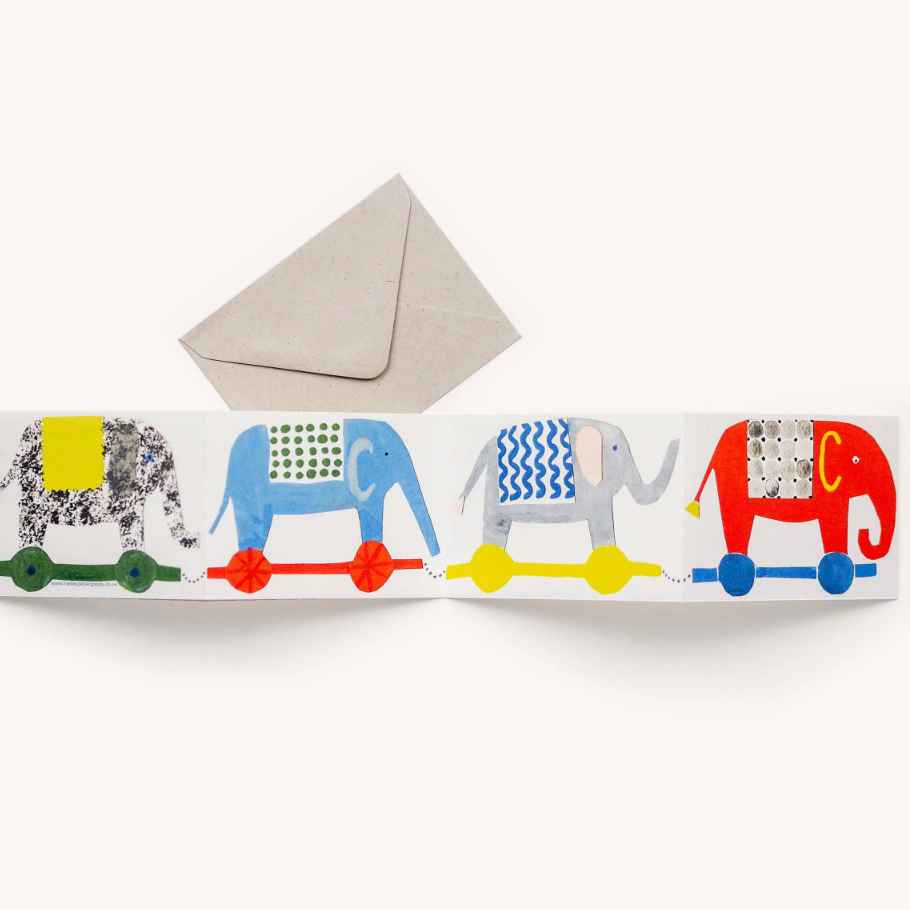
- Sending people letters or cards: Some lovely greetings card companies like Hadley Paper Goods, Art Angels, Cambridge Imprint – why not buy a whole load of cards and stamps so you can send someone a physical card to celebrate an occasion or just say hi.
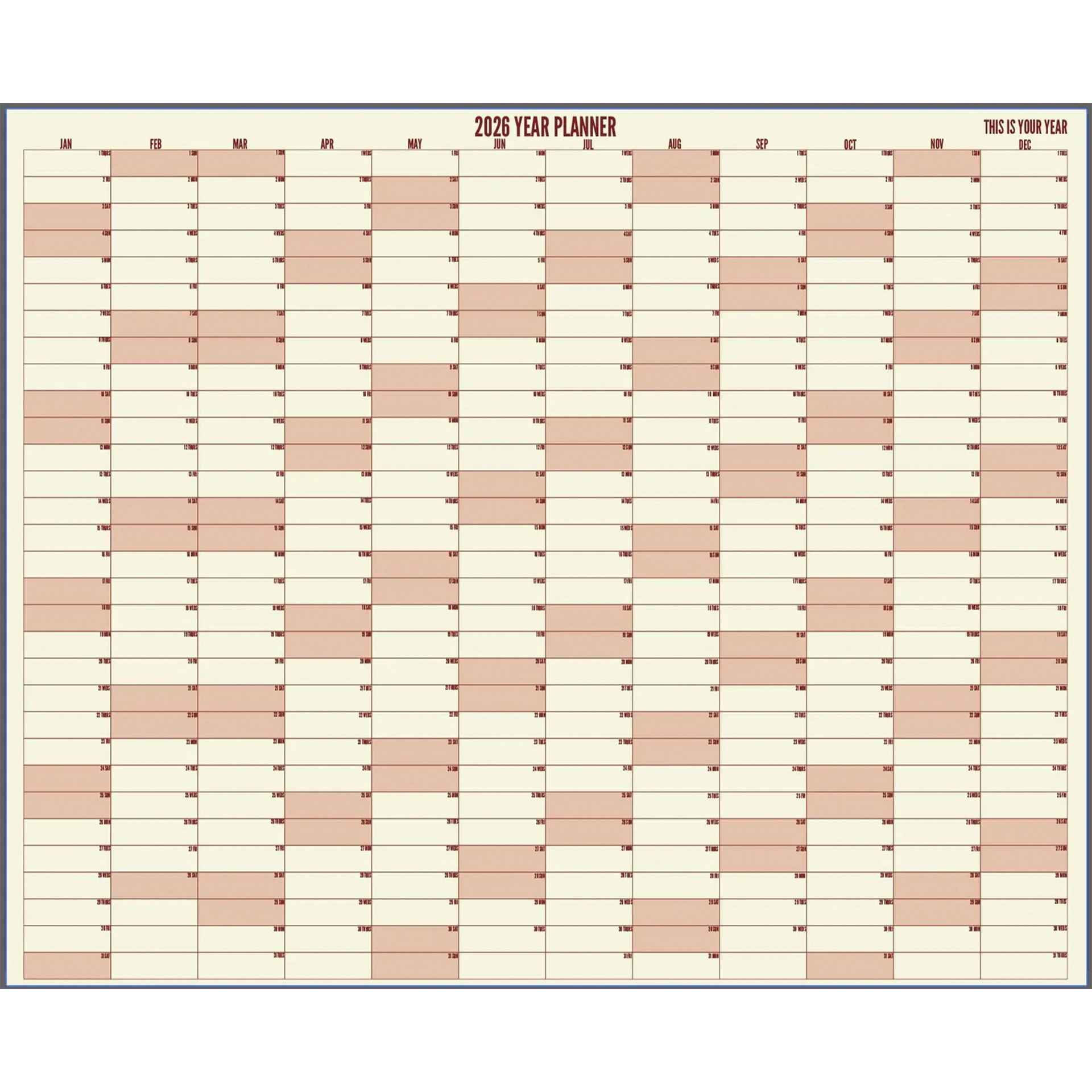
- Keep a physical diary: something you can put ideas down into, to write down appointments and occasions or even look at Laura Jacksons enormous wall planner so you can plot the whole year out.
- Print photographs: after having Sasha, I bought a little Canon Selphy printer and have been going through once a month and printing out pictures so I have them physically in an album rather than all lost on my phone
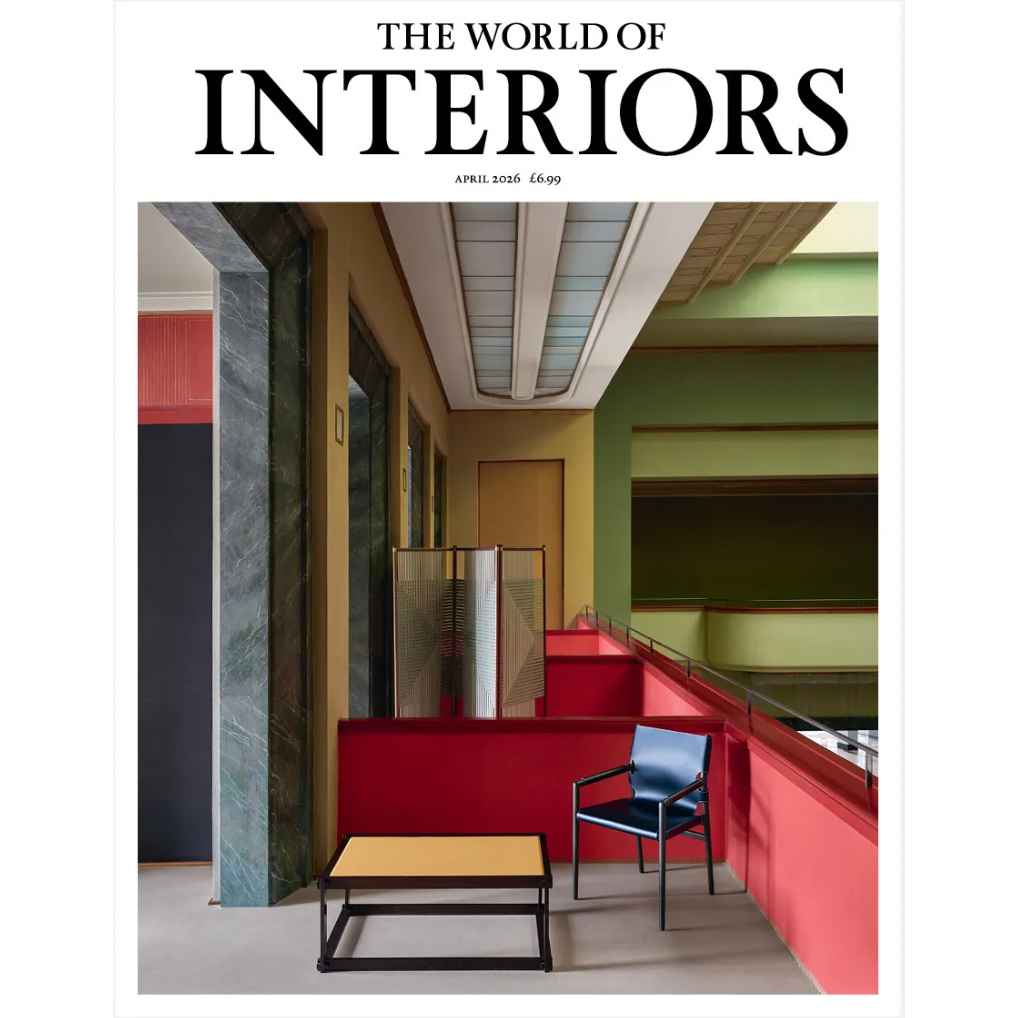
- Subscribe to a print magazine: AND! read all the sections you don’t necessarily think you’ll find interesting – some suggestions: World of Interiors, Faire or Uppercase
- Cook from recipe books rather than apps: pick a book and try and work your way through recipes rather than darting about online. Recently we have been doing this with Ottolenghi Comfort - and even the recipe's I don't expect to like are delicious.
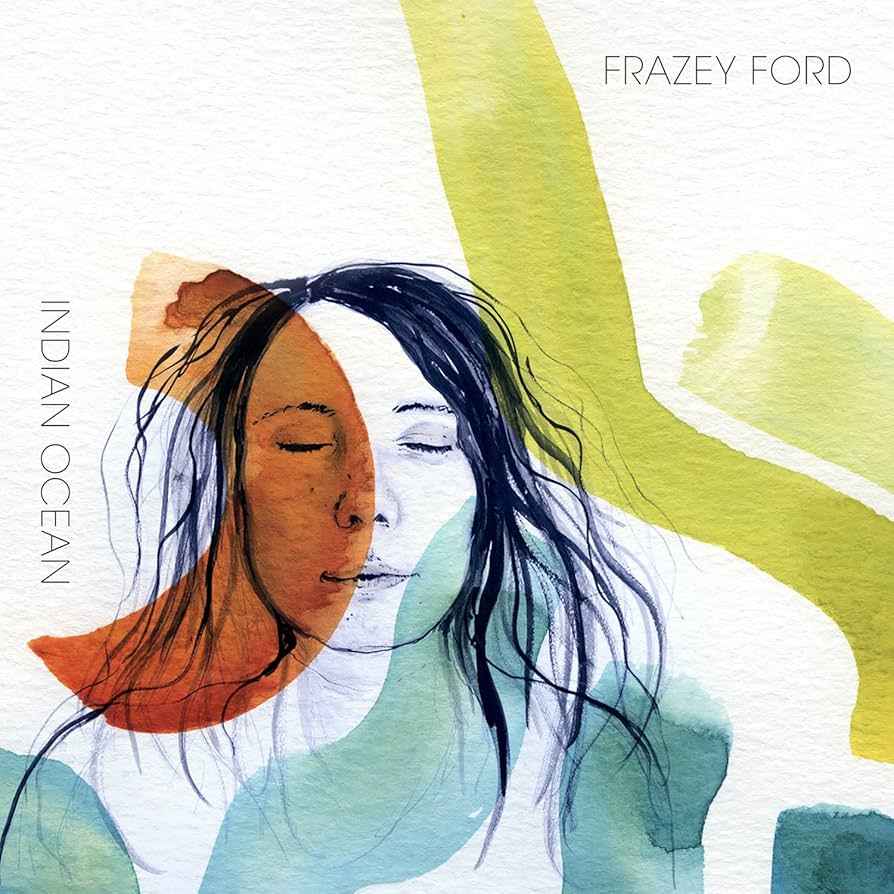
- Listen to full albums: It's all too easy to dart around between radio, podcasts, songs, artists on Spotify. And not that that's wrong, but it can add to an overall frantic and distracted feeling. Instead why not just pick an album and listen to it start to finish. My favourite is Indian Ocean by Frazey Ford.
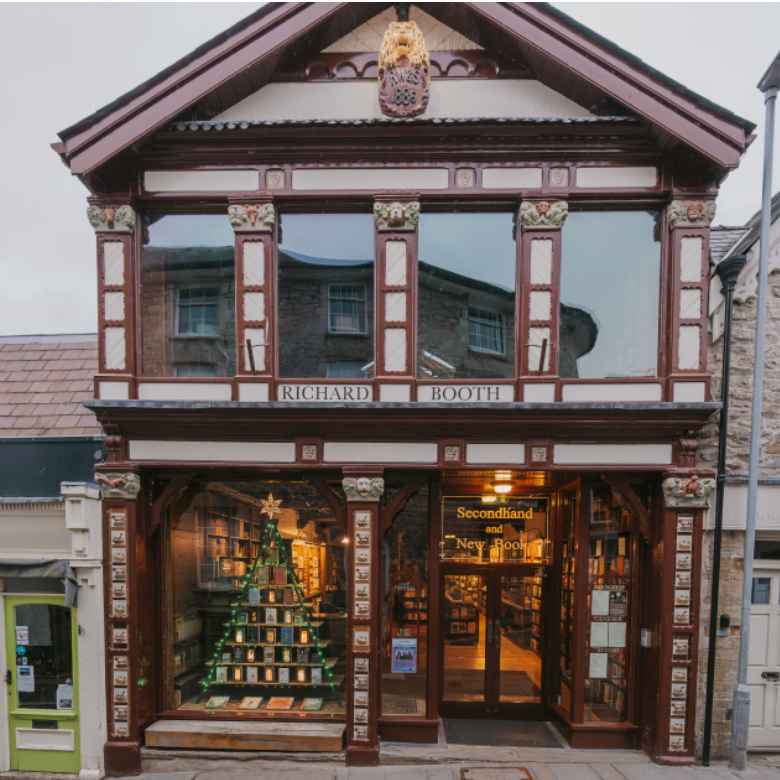
- Go to a bookshop: There is no place quite as calming or exciting as a bookshop - full of opportunity for new reads, exciting discoveries and with a sense of anticipation. Leaving with a bag of books and expectation for reading time ahead is exciting. Make a pilgrimage to Richard Booth in Hay-on-Wye... you won't regret it!
- Keep inspiration offline: Rather than creating a Pinterest board or bookmarking on instagram - keep a physical folder or scrapbook of inspiration. Watch the video below to find out how to do this.
- Take a silent walk: Walk without headphones rather than listening to a podcast and download the Merlin app, which will identify any birds you see or hear (this feels like a good example of balancing digital with analog).
- Stop the notifications: Removing your email from your phone so you can only check it when physically sitting at your computer. I did this a year or so ago and it's been totally transformative. A good afternoon is no longer scuppered by a bad email. Instead - I control how and when work can interupt life.
- Join a class: Something that means you have to leave your phone in another place and out of sight, like a yoga class or bread making course. Back when I worked in finance, I used to go to an evening class every week at Art Academy. It didn't matter what I was doing - drawing, printing, sculpture - what mattered was that for those 2 hours I was completely absorbed!
- Find exercise that switches you off: Swimming is probably the best example of being forced to step away from digital media. Good luck trying to use a phone in the swimming pool. The gentle pace, the repetitive breathing, the requirement to just be with your thoughts - it's a detox!
- Find a hobby that uses your hands: Some of our favourite activities are thankfully already naturally analogue - embroidery, painting, sketching (more on this below). You could even design your own embroidery, which is incredibly rewarding! Article on how to do that here.
Our embroidery kits for beginners


- Reading a newspaper: Go and pick up one of the sunday broadsheets. Read the news but also take a look through the supplements - read articles you wouldn't normally. You never know what you'll enjoy and it can help break out of the echo chambre of news or doom spiral that can happen online!
- Take up gardening: Michelle on our team, is an avid gardener and says it's totally absorbing and physically demanding, but there is calmness to be found in the process. You have to concentrate on what you're doing, so your mind can wander. It's also an exercise in hope and patience. All the work you do now is for your own future excitement - even if its just a few pots
- Play cards or a game in the evening: Rather than just watching TV, why not make the time in the evening for a quick game of cards with your partner, friends or family. We are mad backgammon players in the family - it's always best of three so never goes on too long.
We would encourage you to introduce small changes to your habits and routines - rather than attempt an extreme digital detox, which you might not enjoy and could quickly lead back into old habits!
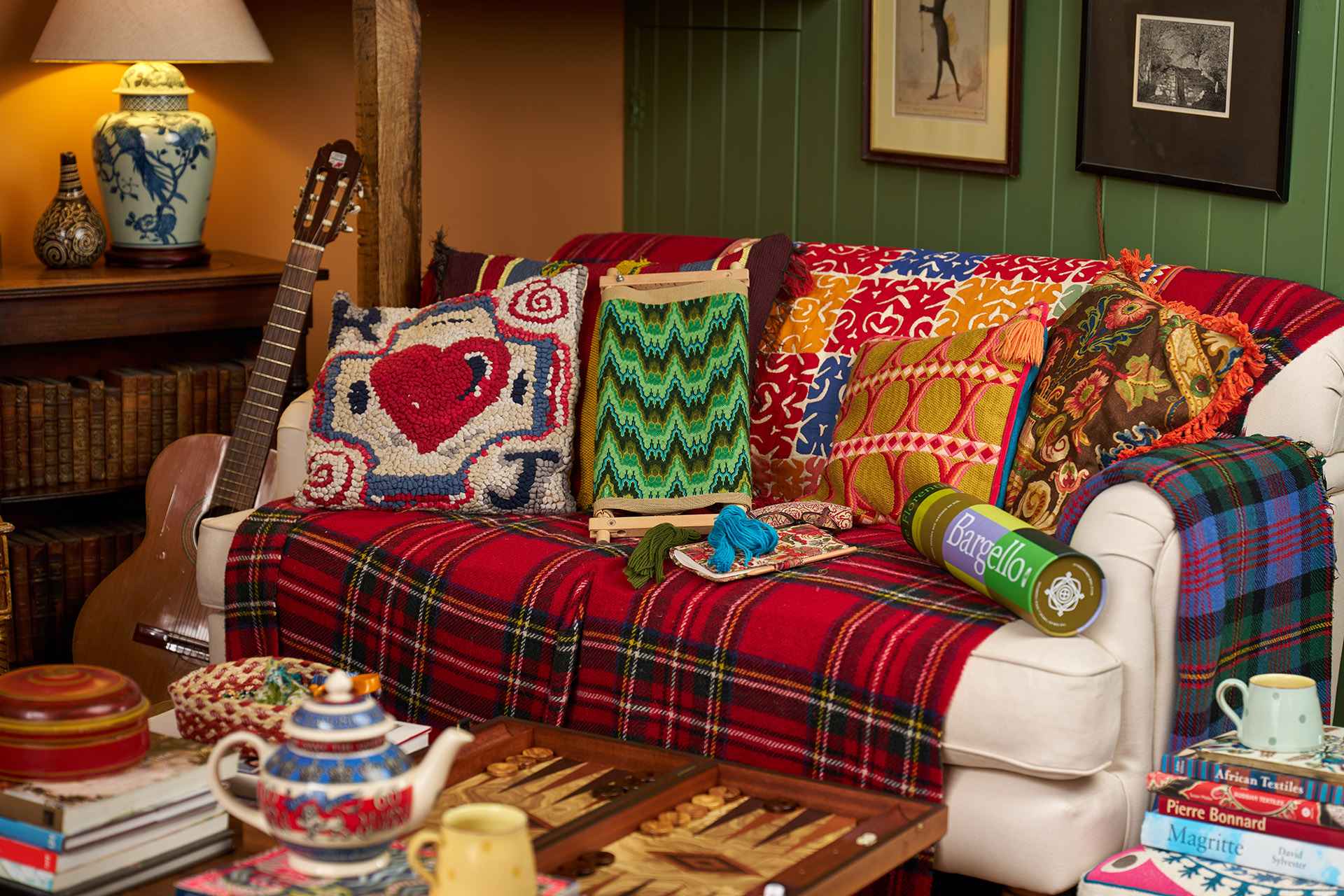
There are real advantages to loosening our grip on digital media a little. Life feels noticeably calmer when you can focus on one thing at a time without constant interruptions. You start to rediscover the quiet pleasure of slower things - like putting on an album and listening from beginning to end rather than endlessly skipping through playlists. (And if a CD player feels a bit optimistic these days, a radio works perfectly well too.)
There’s also something rather lovely about becoming so absorbed in what you’re doing that you forget to document it. Spending time on a project purely for your own enjoyment, with no audience and no expectation attached. Left alone with your thoughts for a while, you might even find a bit of deeper thinking - or simply the sort of mental rest that feels increasingly rare.
And then there’s the simple pleasure of working with your hands. Physical materials naturally pull you away from screens and back into the tactile world - which, if I’m honest, is one of the reasons I picked up embroidery in the first place.
None of this is about rejecting technology entirely. It’s really about finding a healthier balance. But creativity - especially hands-on creativity - happens to be one of the easiest ways to bring a bit more analogue living back into everyday life. And more often than not, those are the moments that leave us feeling quietly restored rather than drained.
- What does living an analog life mean? - It means choosing tactile, offline, slower experiences over screen-based or algorithm-driven ones. It does not mean rejecting technology entirely, it’s about balance and intentionality.
- Why is everyone talking about analogue living? - There has been a dramatic increase in people talking about making their lives “more analogue,” largely due to factors like screen fatigue, social media overwhelm, constant notifications, fractured attention, and the feeling that life is somehow being performed rather than lived. This has led many people to openly crave a conscious rebalance of their digital use with slower, more tactile, offline habits and routines.
- How do I reduce screen time? - Working on a hands-on project like embroidery and using physical materials gives you tactile satisfaction and encourages you to step away from a screen.
- Why are creative hobbies important for analogue living? - Hobbies like stitching naturally limit your phone use because your hands are occupied. Having an interest like embroidery or needlepoint gives you something to focus your attention on, while also reducing the urge to scroll. It encourages patience as you work towards creating something tangible. It gives you a sense of progression while allowing you to deepen your creativity, learn new skills, and create art for your home.
- Are analog hobbies good for mental health? - Yes by reducing our digital use, it will expose us to boredom, patience, the return of long attention spans, the pleasure of anticipation, privacy, uninterrupted thinking time, deep focus, and the ability to sit comfortably with our own thoughts. We can return to focusing on one task at a time without being interrupted. We can take joy in the slow processes of analogue living and find presence and focus in our daily lives.
- What are examples of offline hobbies? - embroidery, needlepoint, drawing, painting, scrapbooking, baking and reading.
- Can creativity replace screen time? - Yes, by not being exposed to the constant stream of content online, you allow your personal taste to develop and feel more encouraged to experiment. Perhaps the most impactful aspect of creating offline is that it removes performance anxiety, which can easily stunt anyone's creative enthusiasm. But best of all, it makes creativity feel much more playful.
- How do I stay inspired without social media? - Visit second-hand bookshops, look at vintage craft books, walk outside to find inspiration in patterns and colours, go to galleries and exhibitions, and sign up for a course to learn skills like printmaking.
- Is embroidery a good hobby for relaxation? - After discovering the joy of this timeless craft while working in high-pressure finance jobs, I made it my mission to introduce more people to sewing. From the very first stitch, you can create beautiful artwork, while the repetitive motions provide a wonderful stress relief.
You may also like

My Life is Not an Instagram Strategy
Read more
Finding Inspiration and Overcoming Creative Blocks
Read more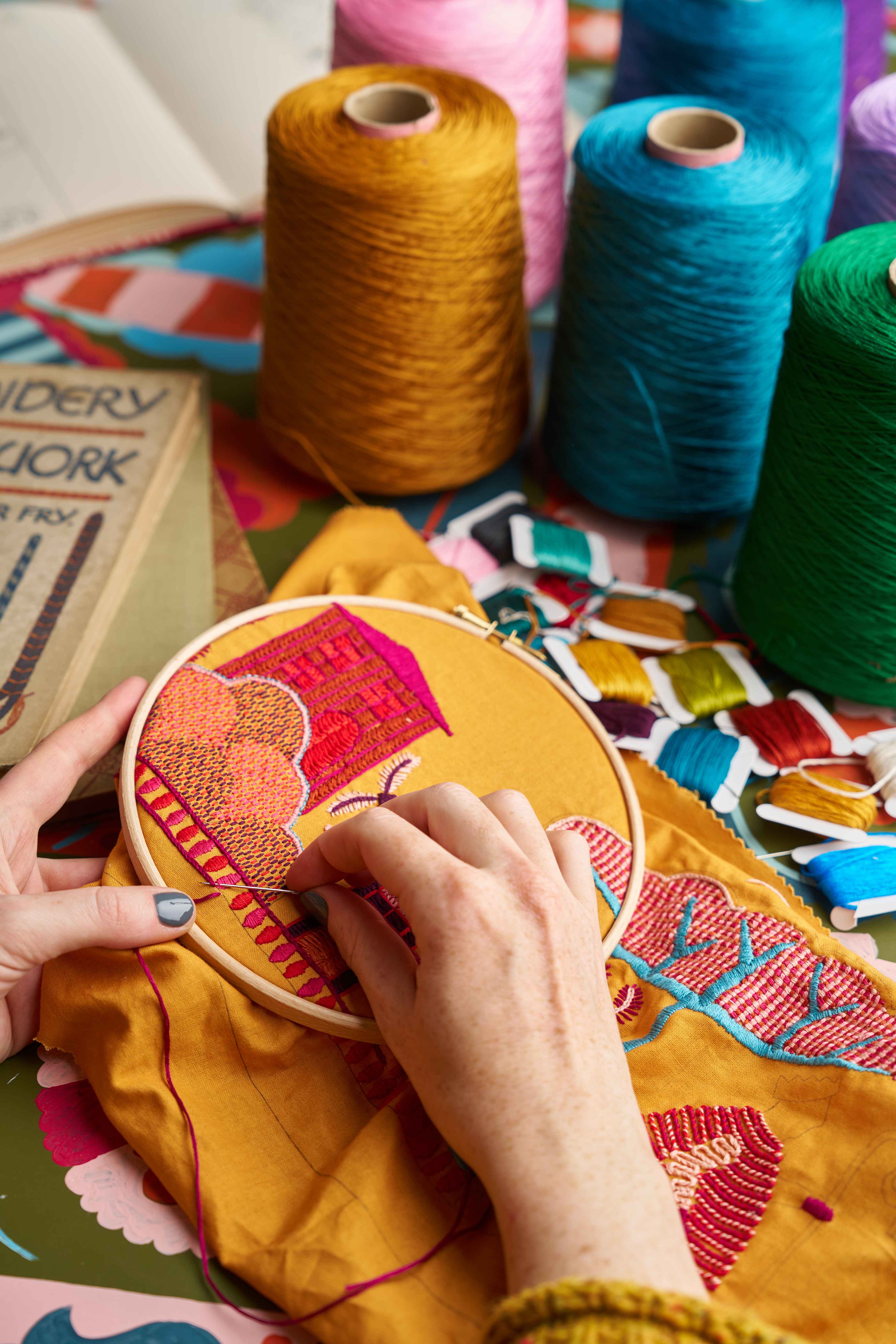
What to do when you don't want to do anything
Read more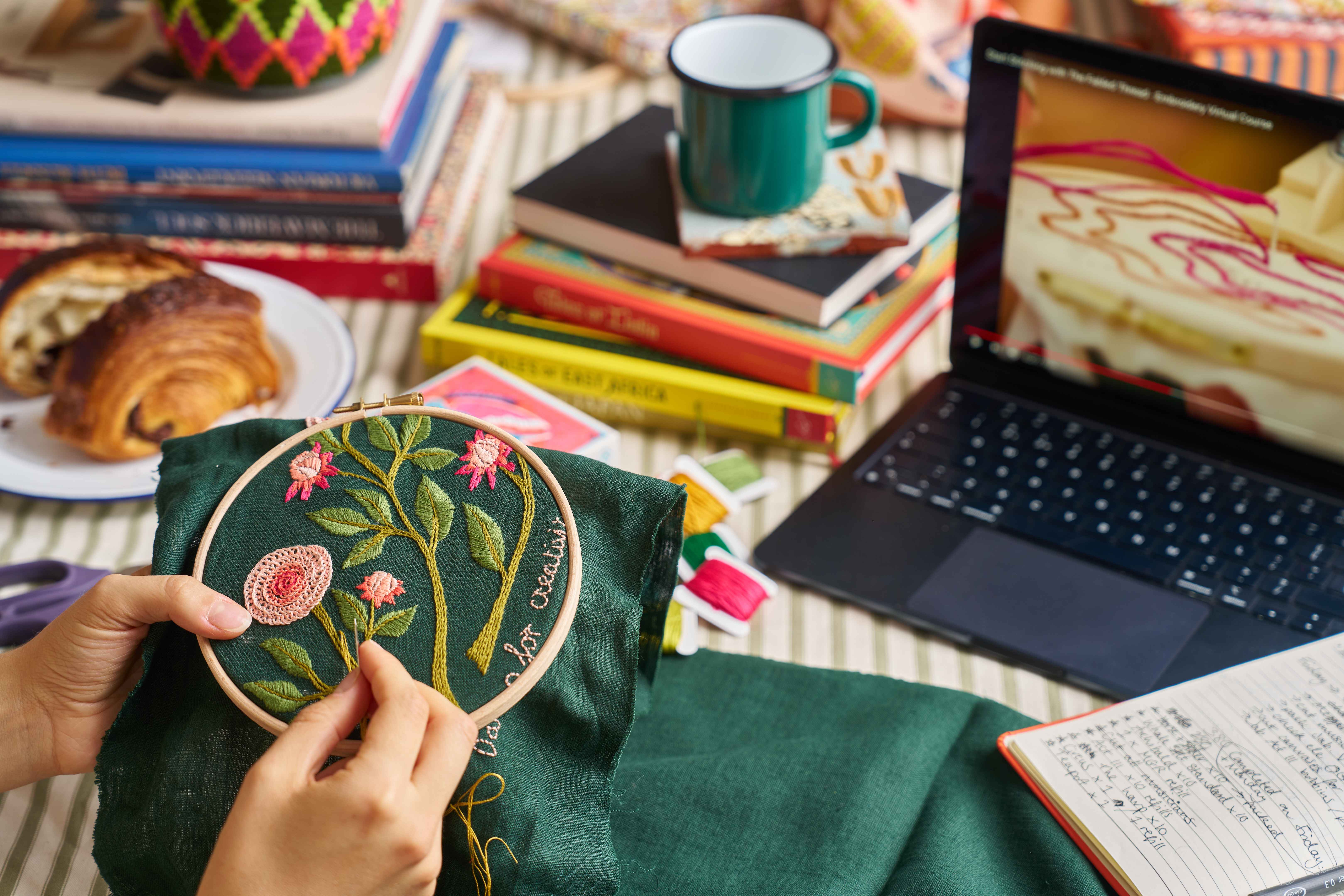
Why Sewing Can Change Your Life
Read more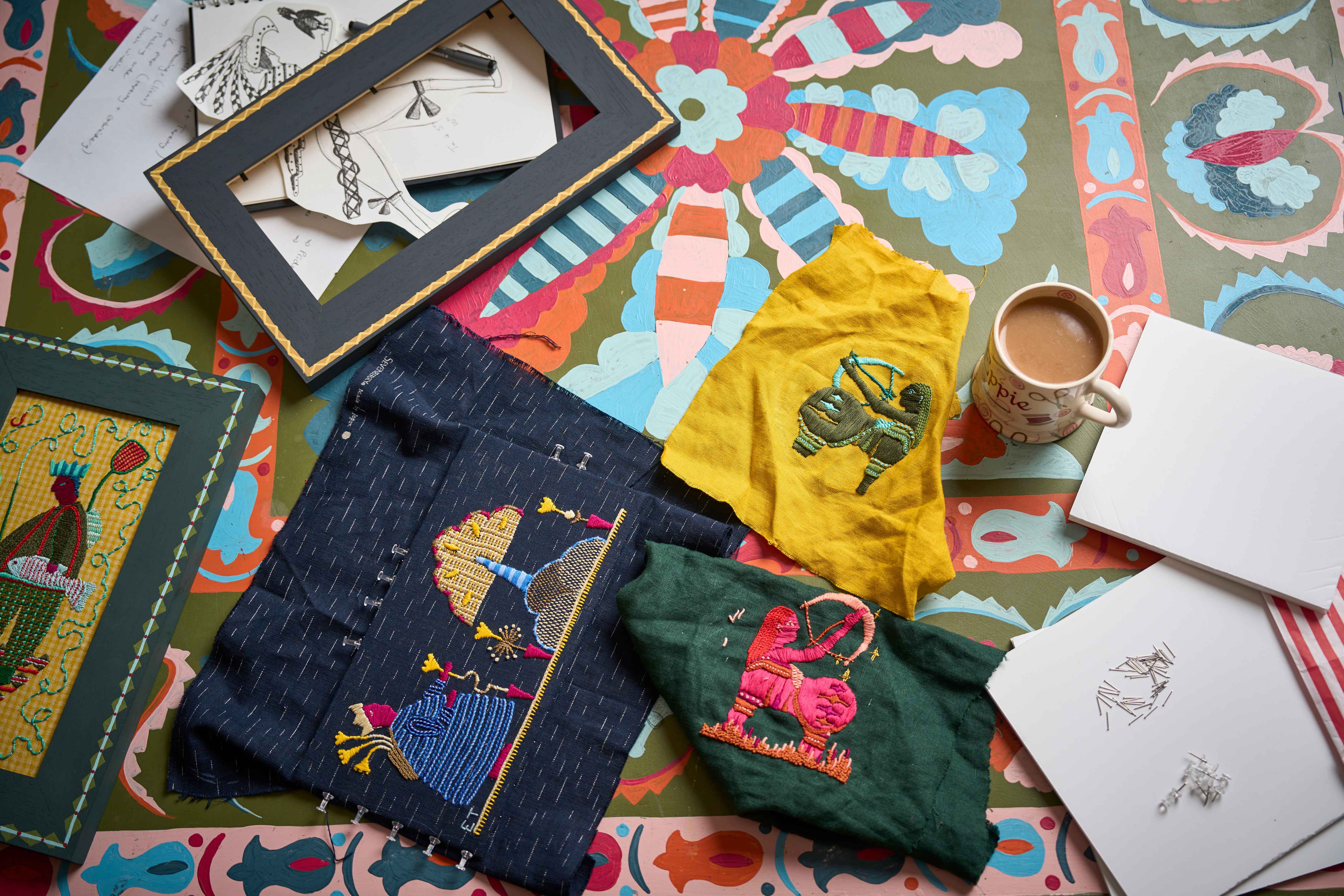
The Sliding Scale of Creative Confidence
Read more