
The Study of Popular Art
An Introduction to Pysanky - Decorated Eggs from Eastern Europe
Art isn’t just found in galleries and museums, it’s woven into the fabric of everyday life. A Study in Popular Art is a celebration of the art that exists beyond the traditional boundaries of "high" culture: the folk art, the functional, the decorative, and the handmade.
From the intricate florals of canal boat painting to the craftsmanship of old shop signs, from the overlooked beauty of cast-iron manhole covers to the sculptural forms of antique jelly moulds, this section is dedicated to shining a light on the creativity that surrounds us. These are the art forms born from necessity, community, and tradition, often dismissed as lowbrow or purely functional, but brimming with skill, history, and artistry.
Today we want to offer a little introduction to Pysanky - beautifully decorated eggs from Eastern Europe.
Pysanky - Eastern European Decorated Eggs
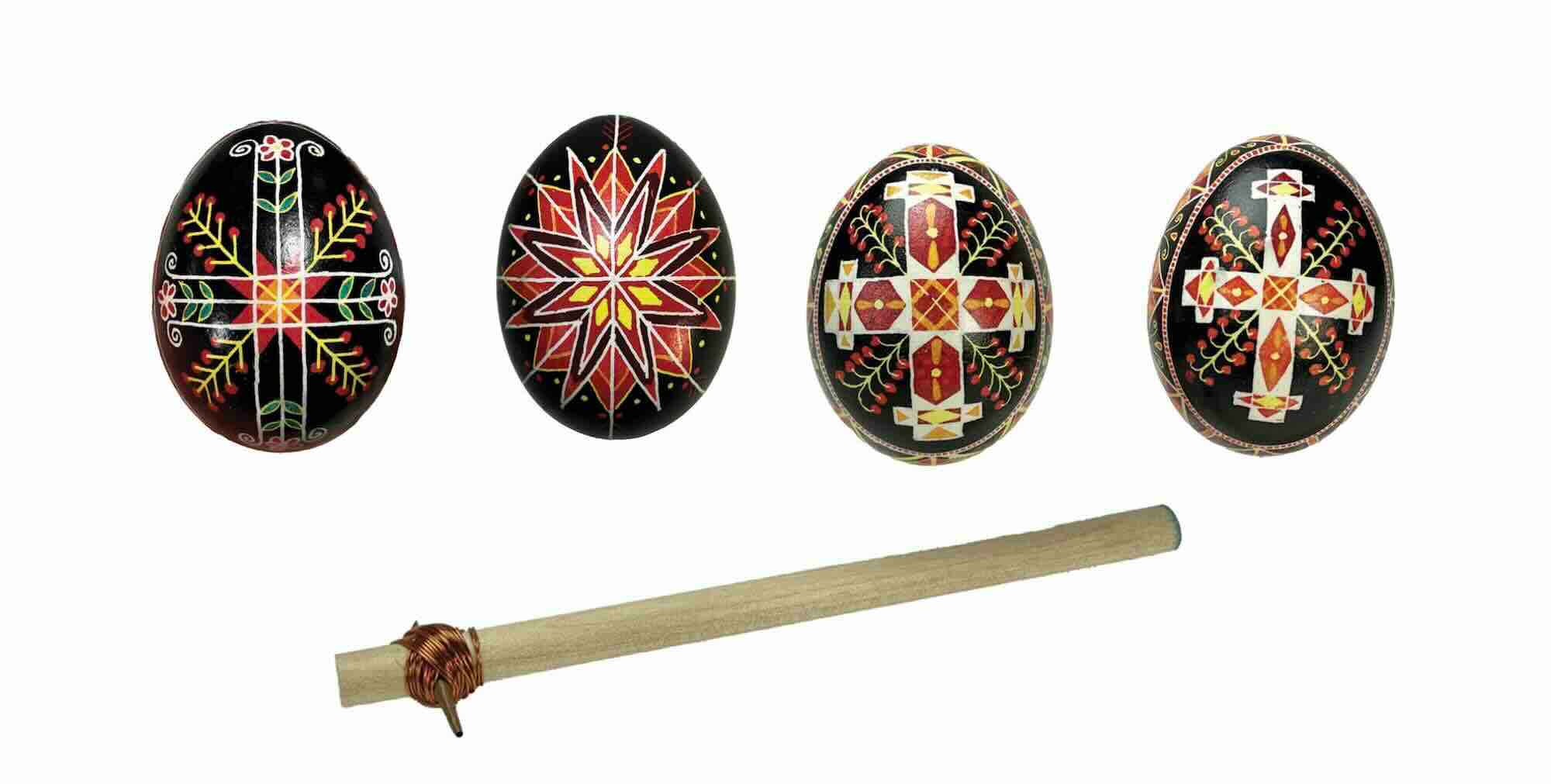
For thousands of years, people around the world have decorated eggs, whether by scratching patterns into their surfaces, painting them, or using wax-resist and dye to create intricate designs. Engraved ostrich egg fragments found in South Africa suggest this tradition could date back as far as 60,000 years. There are countless techniques and styles out there, but few are as delicately detailed as those found in the Eastern European tradition of pysanky.
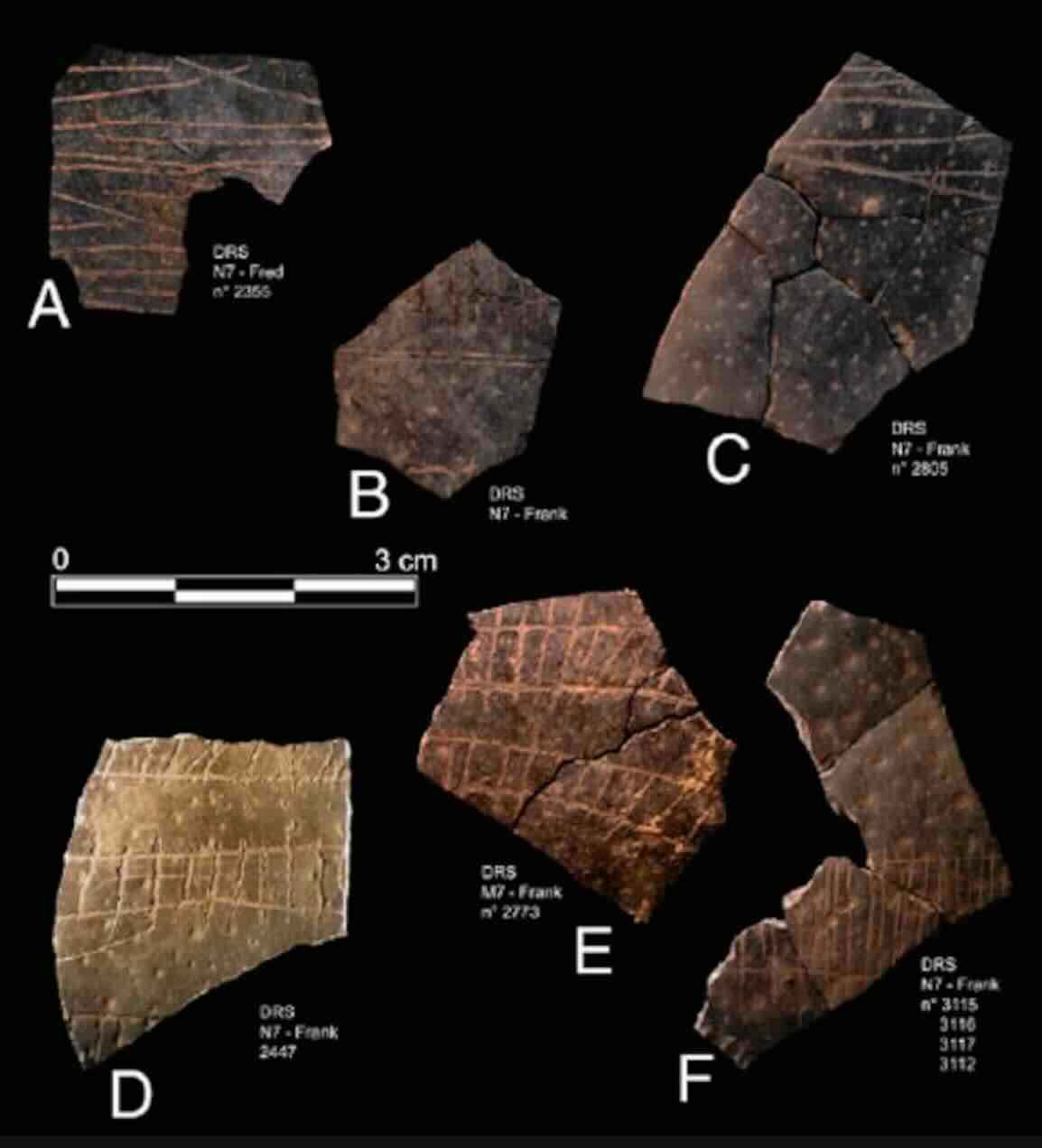
The tradition of pysanky (or pisanki) emerged centuries ago, across Central and Eastern Europe, with particularly deep roots in both Poland and Ukraine. These eggs are made using a wax resist method. The name stems from the word ‘to write’, since the traditional folk designs are ‘written’ onto eggshells in beeswax before dye is applied in layers. If you read our Textile Focus article on Indonesian Batik, you might recognise the technique behind pysanky. The process is exactly the same as batik, with layers of wax resist and dye working together to create intricate patterns. The only difference is that here, rather than drawing on fabric, the designs are drawn onto eggshells.
The painstaking process requires a lot of skill. In the past, designs were drawn onto raw eggs and the insides eventually dried out over time. Now, many pysanky artists blow the contents of their eggs out first. After the design is drawn onto the eggshell in pencil, melted beeswax is applied using a small instrument called a kistka, marking out the areas that will be left white before the egg is dipped into dye. The egg is applied to the lightest dye first. Traditionally, dyes came from natural sources, such as berries, bark, and seeds, but these days, artificial dyes are the norm. The final design is revealed only when the wax is melted away, leaving behind an intricate web of colours and symbols. In the past, animal fat was used to preserve the finished eggs, but today, most artists use varnish to protect their designs and give them a glossy finish.
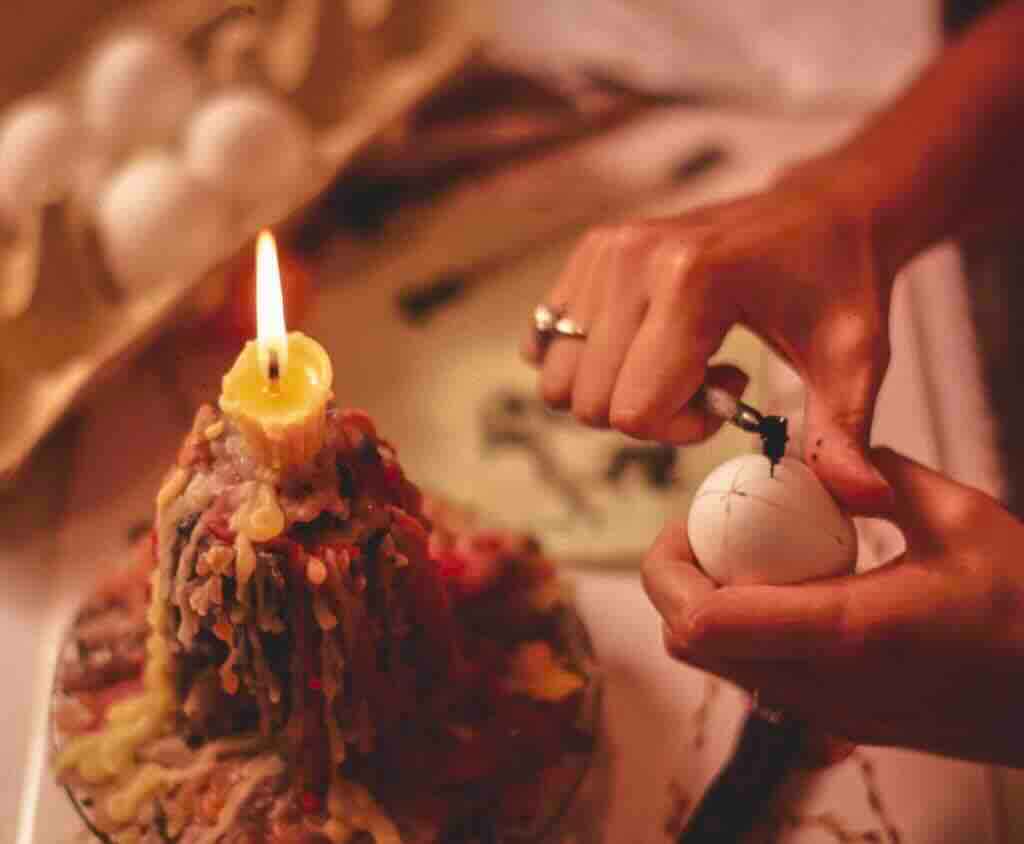
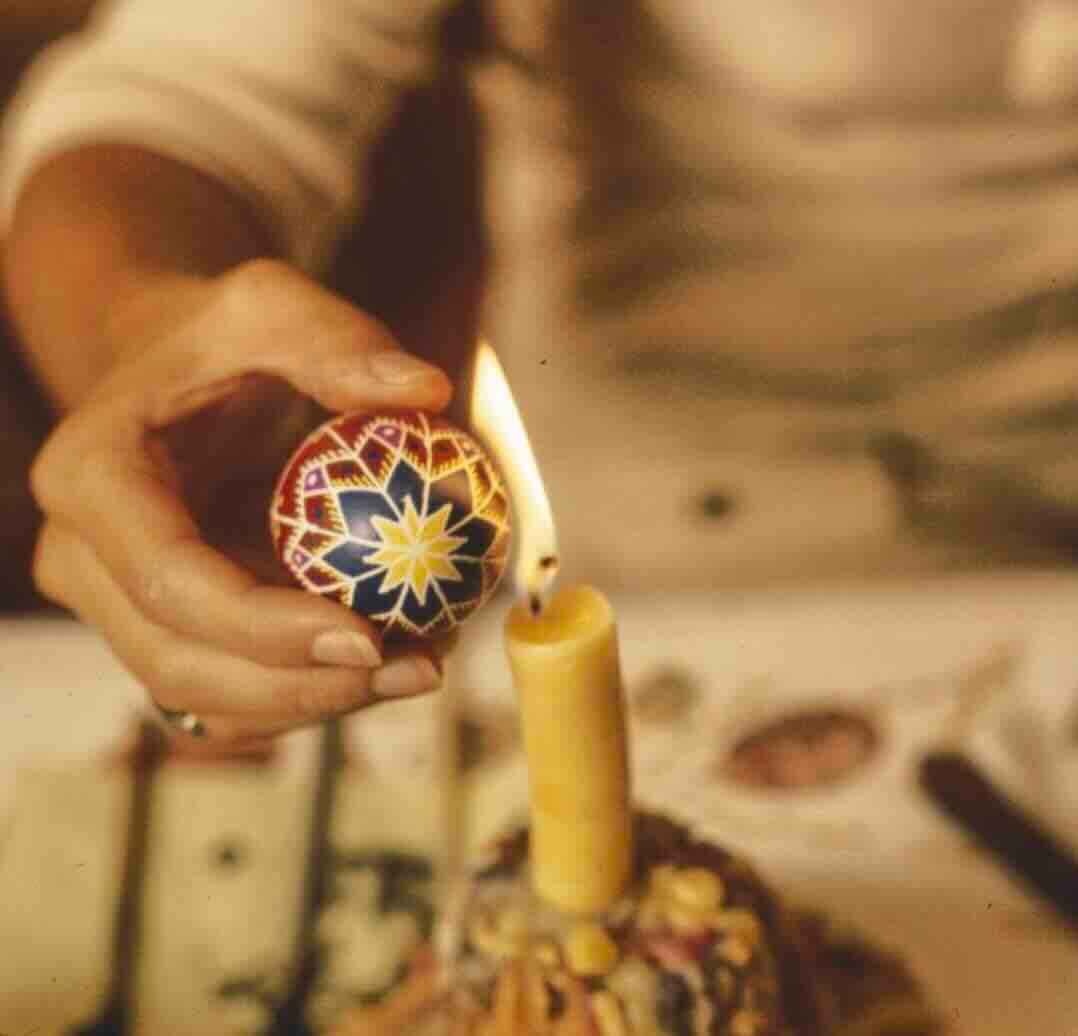
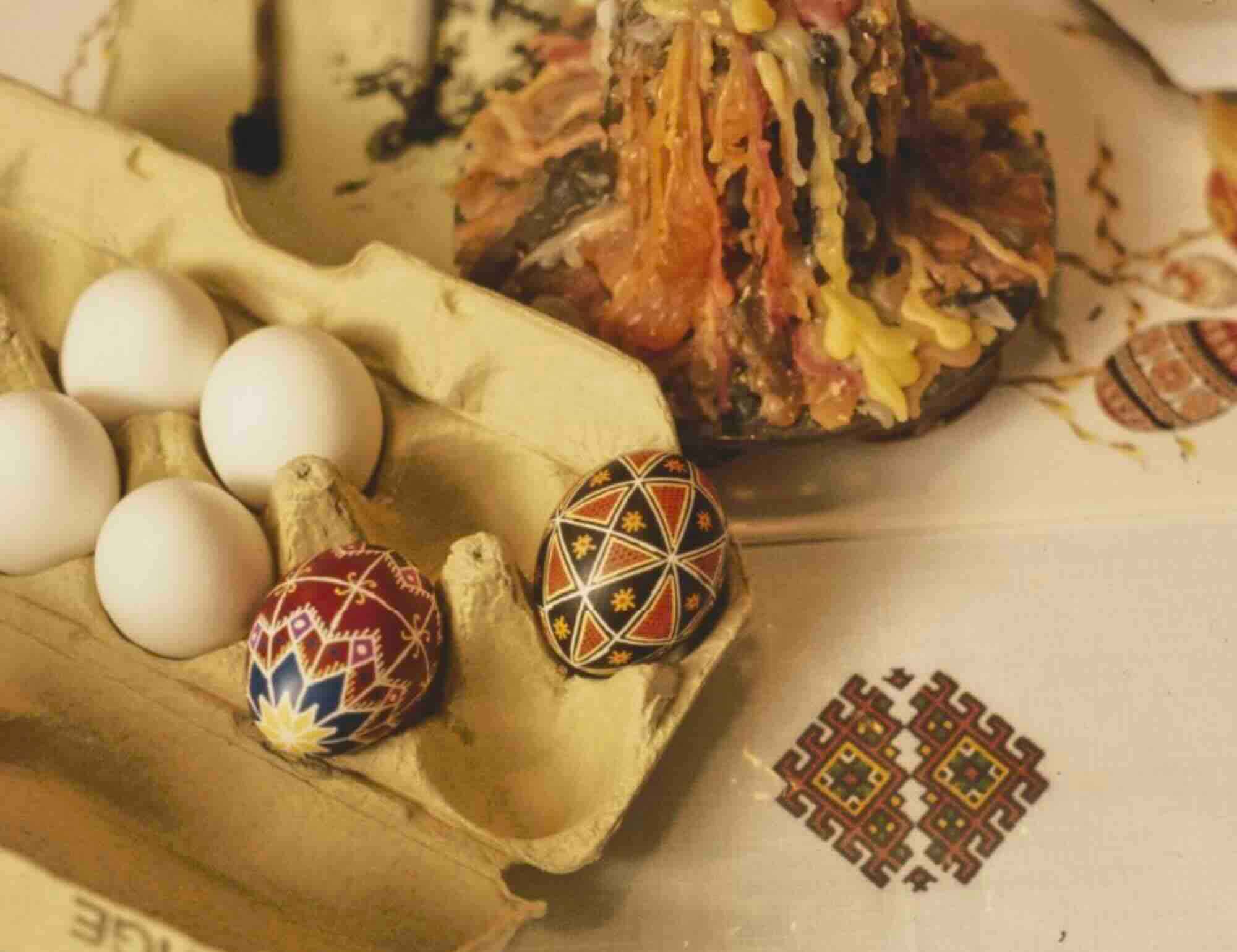
Originally, pysanky were part a pagan practice, celebrating the arrival of spring and honouring the sun god. Elaborate patterns were designed on eggs as a symbol of new life, and these worked as protective talismans to bless households and offer good luck for the coming spring. Pysanky were thought to ward off sickness and evil spirits, by trapping the spirits in a maze of intricate lines.
The traditional designs all carried symbolic meaning, with motifs such as Star rosettes being a popular design, representing sun rays and ensuring the return of the sun god each spring. Motif designs had well-known meanings, and so did any pictorial elements, for example, birds symbolised spring, trees meant the tree of life, rams or deer signalled prosperity, and grapes were representative of a good harvest. The colours too had a deeper meaning, with red showing joy, orange strength, and green hope.
With the spread of Christianity, the meaning of pysanky gradually shifted. The designs were no longer rooted in sun gods and spring festivals, but instead came to be associated with Easter, with pysanky becoming symbolic of the resurrection of Christ.
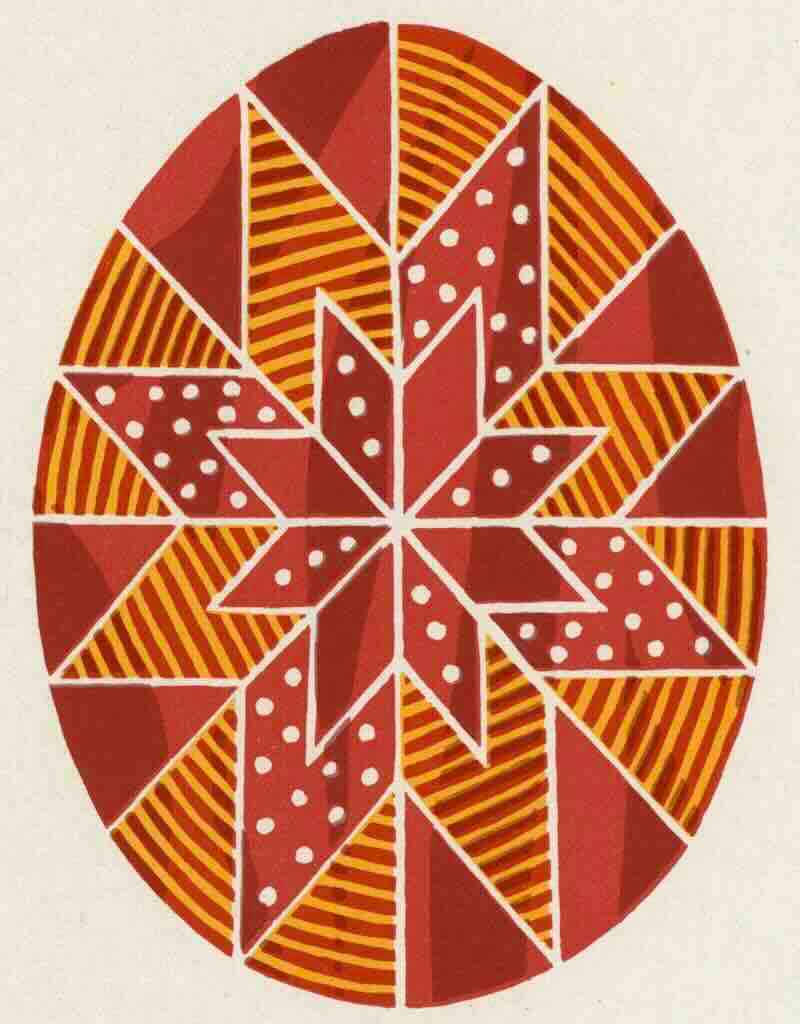
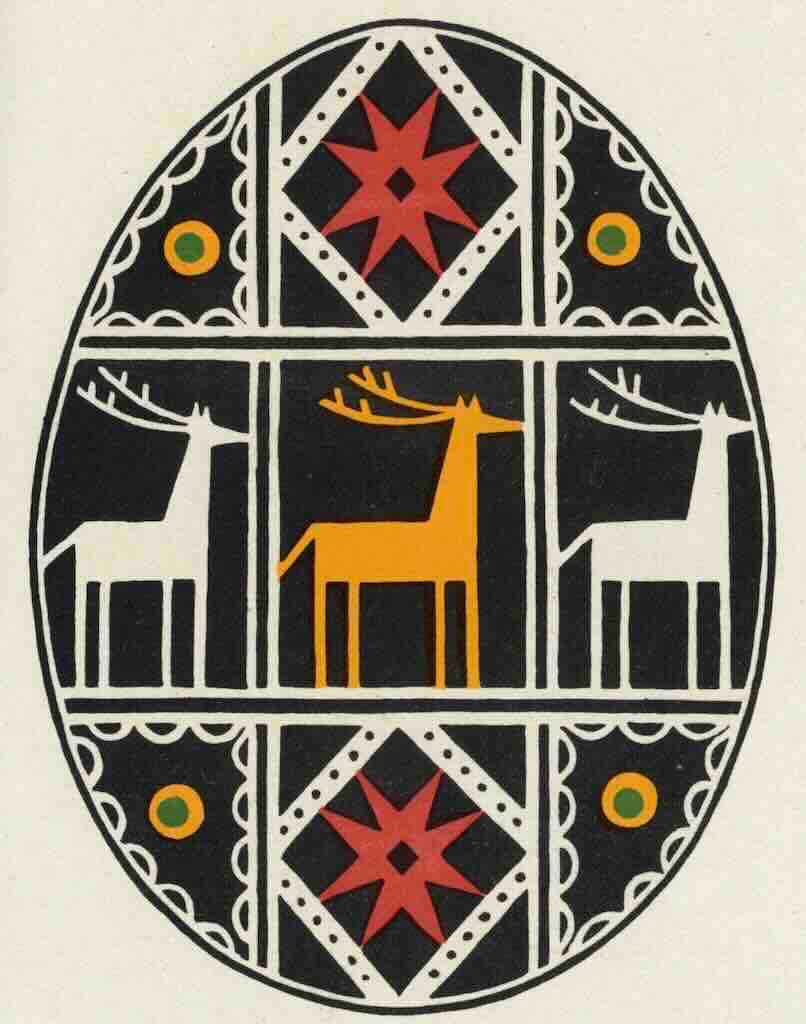
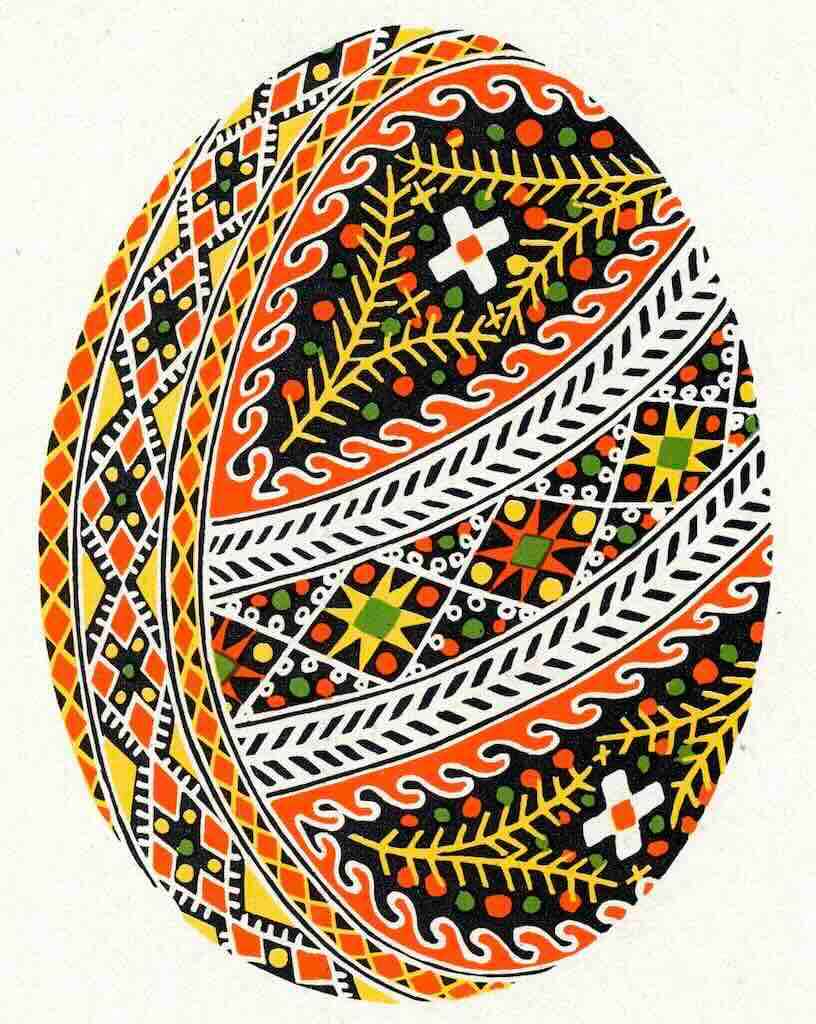
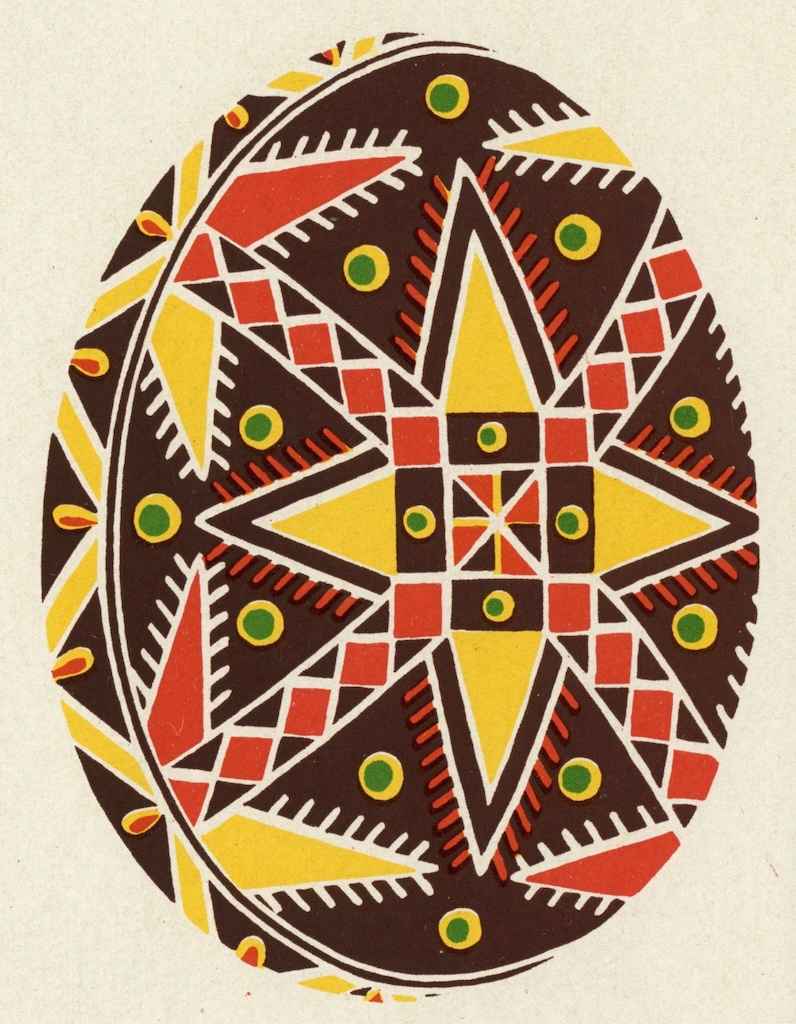
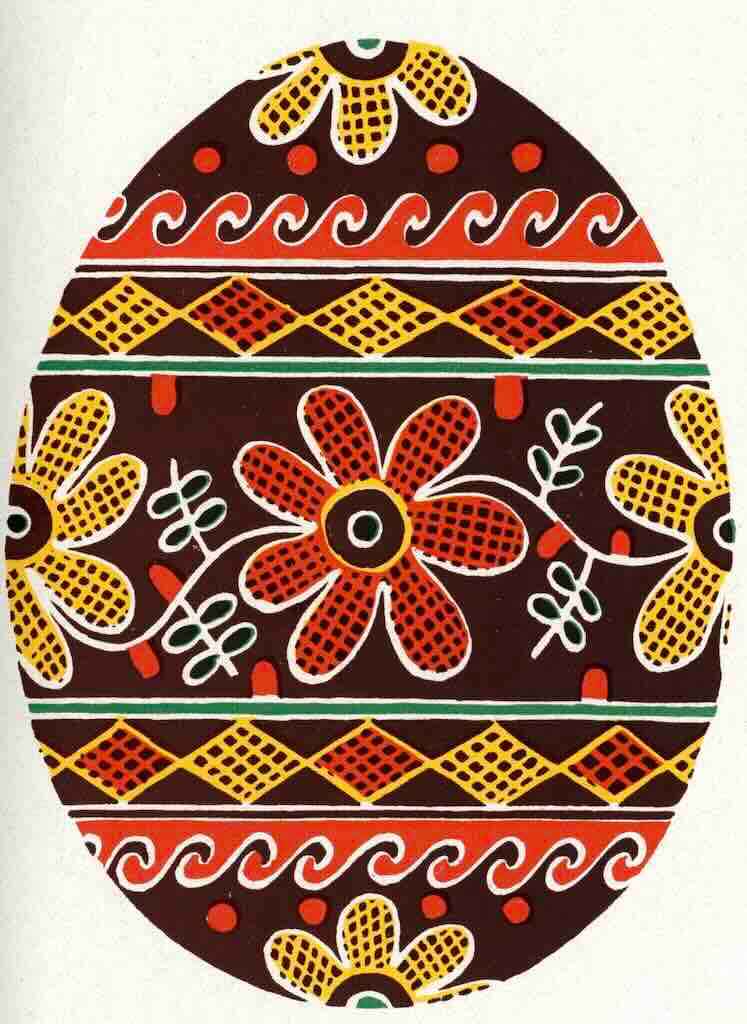
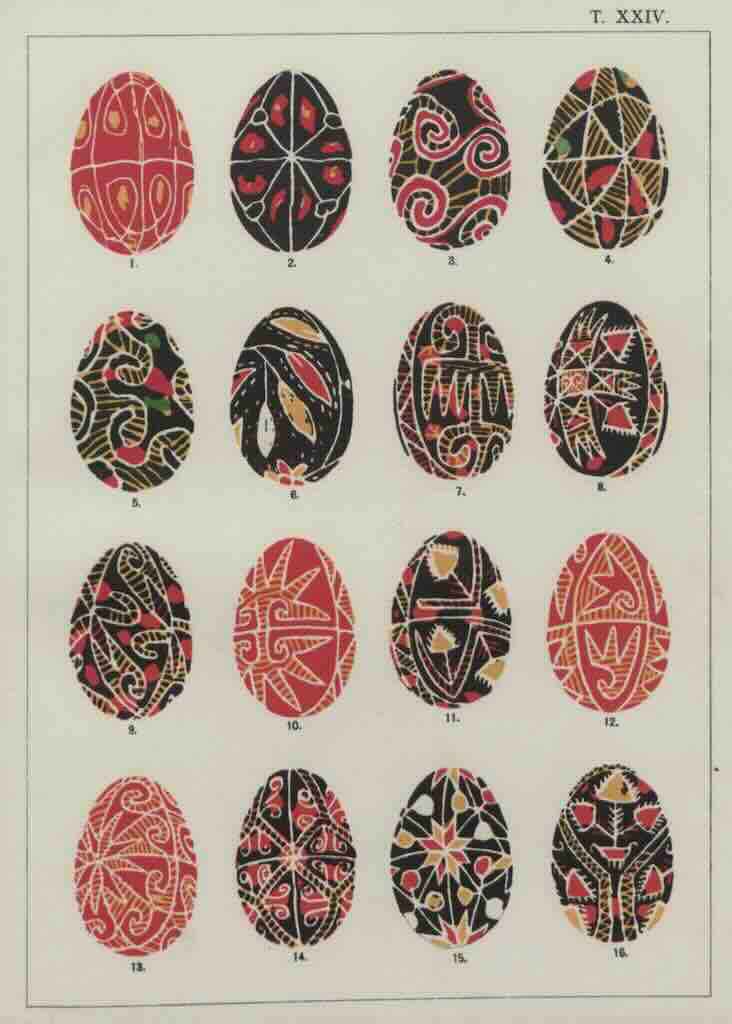
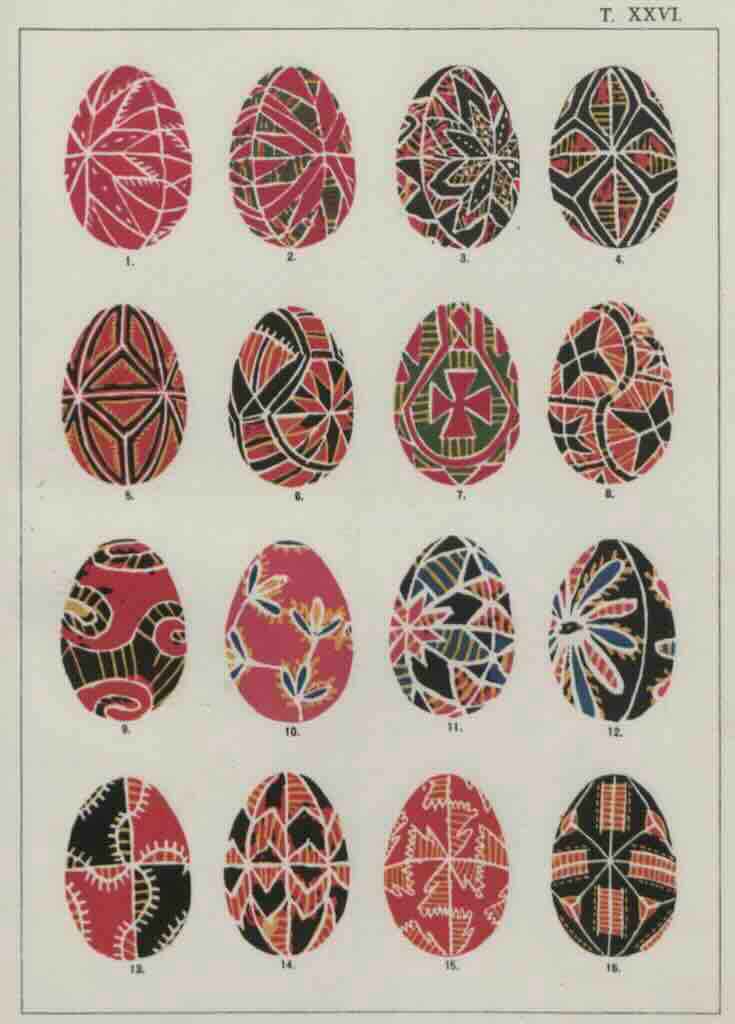
If you would like to explore more traditional pysanky patterns, the Lubenskii Museum (or the Museum of Ukrainian Antiquities in Lubny) published a book featuring drawings of many designs from their remarkable collection of over 2,000 eggs. This is available online and is an incredible resource for anyone interested in this intricate folk tradition.